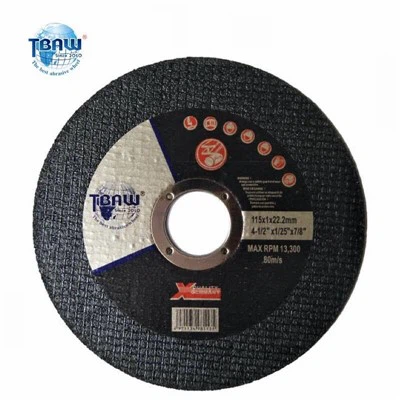
How do 4 1/2 Grinding Discs compare to diamond grinding wheels?
As a supplier of 4 1/2 grinding discs, I've witnessed firsthand the widespread use of these tools across various industries. At the same time, diamond grinding wheels have also carved out their own niche in the market. In this blog, I'll explore how 4 1/2 grinding discs stack up against diamond grinding wheels in terms of performance, application, cost, and more.
Grinding Performance
4 1/2 grinding discs are known for their versatility and efficiency. These discs come in different materials, such as Resin Grinding Disc and Aluminum Oxide Deburring Disc. Resin grinding discs are great for general-purpose grinding. They can handle a range of materials, including metal, wood, and plastic. They offer a smooth grinding action and can quickly remove material. Aluminum oxide deburring discs, on the other hand, are excellent for removing sharp edges and burrs from metal workpieces. They have a high cutting rate and can maintain their sharpness for a relatively long time.
However, diamond grinding wheels take grinding performance to another level when it comes to harder materials. Diamonds are the hardest known natural material, which gives diamond grinding wheels exceptional cutting ability. They are especially effective for grinding materials like concrete, stone, and glass. For instance, Single Row Diamond Concrete Grinding Disc and Turbo Diamond Concrete Grinding Disc are designed specifically for concrete grinding. These discs can quickly and efficiently grind uneven concrete surfaces, making them a popular choice in the construction and flooring industries.
Application Scope
The application scope of 4 1/2 grinding discs is quite broad. In the automotive industry, they are used for grinding and polishing metal parts, such as engine blocks and body panels. In the metal fabrication industry, 4 1/2 grinding discs are used for cutting, shaping, and finishing metal pieces. They are also commonly used in the woodworking industry for sanding and smoothing wooden surfaces. Their compact size makes them easy to handle and maneuver in tight spaces, which is a big advantage in many applications.
Diamond grinding wheels, while more specialized, have a significant impact in their respective fields. In the construction industry, they are essential for preparing concrete floors for coatings or overlays. They can also be used for grinding and shaping natural stone for countertops, monuments, and other architectural elements. In the glass industry, diamond grinding wheels are used for accurate grinding and edging of glass products. Their ability to handle hard and brittle materials with precision makes them indispensable in these industries.
Cost and Durability
When it comes to cost, 4 1/2 grinding discs are generally more affordable than diamond grinding wheels. They are made from relatively common materials, and the manufacturing process is less complex. This makes them a cost - effective option for small - scale projects or for applications where the material being ground is not extremely hard. However, the durability of 4 1/2 grinding discs can vary depending on the material and the application. For example, resin grinding discs may wear out more quickly when used on hard metals, while aluminum oxide deburring discs can last longer under normal use.
Diamond grinding wheels, on the other hand, are more expensive upfront. The cost of diamonds and the specialized manufacturing process contribute to their higher price. However, they offer excellent durability. Due to the hardness of diamonds, these wheels can maintain their cutting performance for a long time, especially when used on hard materials. In the long run, the cost per use of diamond grinding wheels may be lower, especially for large - scale projects where durability is crucial.


Safety and Maintenance
4 1/2 grinding discs require proper safety precautions during use. Operators should wear safety glasses, gloves, and a dust mask to protect themselves from flying debris and dust. These discs should also be inspected regularly for signs of damage, such as cracks or chips. If a disc is damaged, it should be replaced immediately to prevent accidents.
Diamond grinding wheels also require strict safety measures. Since they are used for grinding hard materials, the risk of kickback and flying debris is high. Operators need to use a proper guard and follow all safety guidelines. Maintenance of diamond grinding wheels involves dressing the wheel regularly to keep the diamonds exposed and sharp. This process can be time - consuming but is necessary to ensure optimal performance.
Compatibility with Equipment
4 1/2 grinding discs are compatible with a wide range of power tools, including angle grinders. Their standard size makes them easy to fit on most common tools. This compatibility is one of the reasons for their popularity, as it allows users to switch between different types of 4 1/2 grinding discs without having to change their equipment.
Diamond grinding wheels may require specialized equipment, especially for large - scale applications. For example, in the concrete grinding industry, heavy - duty floor grinders are often used with diamond grinding wheels. These machines are designed to provide the necessary power and stability for effective grinding. However, for smaller diamond grinding discs, they can also be used with angle grinders, similar to 4 1/2 grinding discs.
Conclusion
In conclusion, both 4 1/2 grinding discs and diamond grinding wheels have their own unique advantages. 4 1/2 grinding discs are versatile, affordable, and easy to use with common equipment. They are suitable for a wide range of applications, especially for grinding softer materials. On the other hand, diamond grinding wheels offer superior performance when it comes to hard and brittle materials, and they have excellent durability in the long run, despite their higher upfront cost.
As a supplier of 4 1/2 grinding discs, I understand the importance of choosing the right tool for the job. Whether you need a Resin Grinding Disc for general - purpose grinding or a Single Row Diamond Concrete Grinding Disc for concrete work, I'm here to provide you with high - quality products and professional advice. If you're interested in our 4 1/2 grinding discs or other related products, such as 5 Inch Grinding Wheels, I encourage you to contact me for a detailed discussion. Let's work together to find the best grinding solution for your specific needs.
References
- "Grinding Technology: Theory and Applications of Machining with Abrasives" by Stephen Malkin
- "Handbook of Abrasive Technology" by Richard A. Lutz