

Hey there! As a supplier of Cut-off Wheels, I'm super stoked to share with you how these nifty tools work. You might be wondering, what exactly is a cut-off wheel? Well, it's a thin, circular abrasive disc designed to cut through various materials like metal, stone, and concrete. And let me tell you, they're a game-changer in the cutting world!
So, how does a cut-off wheel work? It all starts with the basic principle of abrasion. When the cut-off wheel spins at high speeds, usually powered by an angle grinder or a cut-off saw, the abrasive particles on its surface come into contact with the material you're cutting. These particles act like tiny cutting teeth, grinding away at the material and gradually wearing it down.
The key to a cut-off wheel's effectiveness lies in its abrasive material. Different types of abrasives are used depending on the material you're cutting. For example, aluminum oxide is great for cutting through ferrous metals like steel and iron. It's tough and durable, and it can handle the high heat generated during the cutting process. On the other hand, silicon carbide is often used for cutting non-ferrous metals like aluminum and copper, as well as for cutting through ceramics and stone. It's a bit more brittle than aluminum oxide, but it also has a sharper cutting edge, which makes it ideal for these softer materials.
Another important factor is the bond that holds the abrasive particles together. The bond needs to be strong enough to keep the particles in place while the wheel is spinning, but it also needs to be able to break down gradually as the particles wear away. This allows new, sharp particles to be exposed, ensuring a consistent cutting performance throughout the life of the wheel. There are several types of bonds used in cut-off wheels, including resinoid bonds, vitrified bonds, and metal bonds. Resinoid bonds are the most common, as they offer a good balance of strength and flexibility.

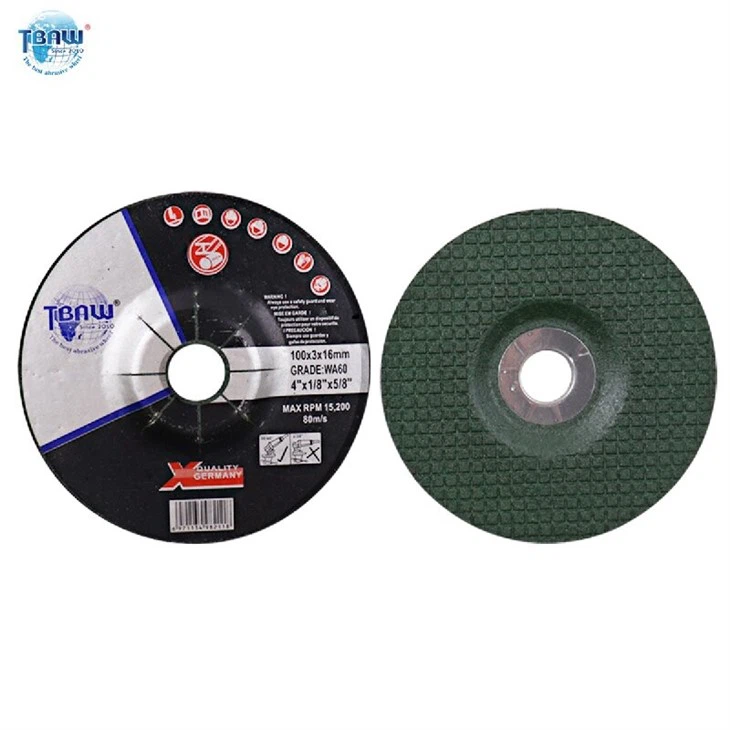
Now, let's talk about the design of the cut-off wheel. The shape and size of the wheel can have a big impact on its performance. Most cut-off wheels are thin, usually ranging from 0.04 to 0.125 inches thick. This thin design allows for a narrow kerf, which means less material is removed during the cutting process, resulting in less waste and a cleaner cut. The diameter of the wheel can also vary, depending on the application. Smaller wheels, typically 4 to 6 inches in diameter, are often used for handheld angle grinders, while larger wheels, up to 14 inches in diameter, are used for stationary cut-off saws.
Some cut-off wheels, like the Depressed Cutting Disk, have a special design that allows them to be used for both cutting and grinding. These wheels have a depressed center, which provides clearance for the grinding surface, and they can be used to shape and finish the edges of the cut material.
When using a cut-off wheel, it's important to follow some safety guidelines. First of all, always wear appropriate safety gear, including safety glasses, gloves, and a face shield. The high speeds at which the wheel spins can cause debris to fly off, and you don't want any of that getting into your eyes or on your skin. Make sure the wheel is properly installed on the tool and that it's tightened securely. Check the wheel for any signs of damage before use, and never use a damaged wheel.
It's also important to use the right speed and pressure when cutting. Using too much pressure can cause the wheel to bind or break, while using too little pressure can result in a slow, inefficient cut. Follow the manufacturer's recommendations for the speed and pressure settings, and always let the wheel do the work.
As a supplier of Cut-off Wheels, I can tell you that there are a lot of options out there. Different brands and models offer different features and performance levels, so it's important to choose the right wheel for your specific application. Whether you're a professional contractor or a DIY enthusiast, having the right cut-off wheel can make all the difference in the quality and efficiency of your cutting work.
If you're in the market for a cut-off wheel, I'd love to help you find the perfect one for your needs. We offer a wide range of Cut Off Discs in different sizes, materials, and designs, all at competitive prices. Our team of experts is always on hand to answer your questions and provide you with the information you need to make an informed decision.
So, if you're looking for high-quality cut-off wheels that are reliable, durable, and effective, don't hesitate to get in touch. Whether you're a small business or a large industrial operation, we can supply you with the right wheels for your cutting needs. Just reach out, and let's start a conversation about how we can help you get the job done right.
References:
- General knowledge of cut-off wheel technology and industry standards.
- Manufacturer's specifications and guidelines for cut-off wheels.


