

What is the difference between a cut off disc and a grinding wheel?
As a supplier of cut off discs, I often encounter customers who are confused about the differences between cut off discs and grinding wheels. These two tools may seem similar at first glance, but they have distinct characteristics, functions, and applications. In this blog, I will delve into the details to help you understand the disparities between them, enabling you to make informed choices for your specific needs.
1. Physical Structure and Design
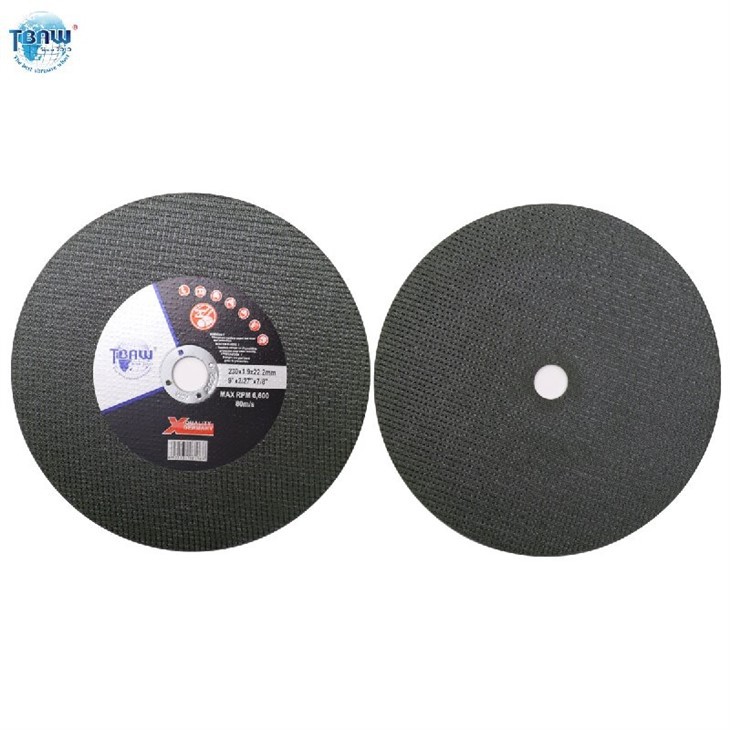
Cut off discs are typically thin, with a thickness usually ranging from 0.8mm to 3.2mm. They are designed mainly for making quick and precise cuts through various materials. The thin design allows for minimal material removal during the cutting process, resulting in clean and accurate cuts. For example, a 4.5 Inch Cut Off Wheel is a common size used in many workshops for cutting metals, pipes, and rods.
On the other hand, grinding wheels are thicker and more robust. Their thickness can vary widely depending on the application, but they are generally much thicker than cut off discs. Grinding wheels are designed to remove a larger amount of material from the surface of a workpiece. They have a more aggressive cutting action and are used for tasks such as shaping, smoothing, and finishing. A Flat Center Cutting Wheel can also be used for grinding in some cases, but its primary function is cutting.

2. Abrasive Materials
The abrasive materials used in cut off discs and grinding wheels are also different. Cut off discs often use abrasive grains such as aluminum oxide, silicon carbide, or zirconia alumina. These abrasives are selected for their ability to cut through hard materials quickly and efficiently. Aluminum oxide is a common choice for cutting ferrous metals, while silicon carbide is more suitable for non - ferrous metals and ceramics.
Grinding wheels, on the other hand, can use a wider range of abrasive materials. In addition to the abrasives used in cut off discs, they may also use superabrasives such as diamond and cubic boron nitride (CBN). Diamond is extremely hard and is used for grinding hard materials like stone, glass, and carbide. CBN is also very hard and is often used for grinding high - speed steel and other tough alloys.
3. Cutting vs. Grinding Action
The main difference between the two lies in their action. A cut off disc is designed to cut through a material by severing it. It creates a narrow kerf (the width of the cut) and is used to separate a workpiece into two or more pieces. For example, when cutting a metal pipe with a cut off disc, the disc quickly slices through the pipe, leaving a clean edge.
A grinding wheel, however, is used to remove material from the surface of a workpiece. It grinds down the material, changing its shape, smoothing rough surfaces, or removing excess material. For instance, when grinding a metal part to achieve a specific shape or finish, the grinding wheel slowly wears away the material until the desired result is achieved.
4. Speed and RPM
Cut off discs are designed to operate at high speeds. They are typically used with high - speed angle grinders, which can rotate at speeds of up to 12,000 RPM or more. The high speed allows the cut off disc to make quick cuts through the material. However, it is important to use the correct RPM for the specific cut off disc to ensure safety and optimal performance.
Grinding wheels also operate at high speeds, but the RPM requirements may vary depending on the type and size of the wheel. Some grinding wheels are designed for lower - speed applications, especially those used for precision grinding. Using a grinding wheel at the wrong RPM can lead to poor performance, excessive wear, and even safety hazards.
5. Applications
Cut off discs are commonly used in metalworking, construction, and automotive industries. They are ideal for cutting pipes, rods, bars, and other metal components. They are also used for cutting tiles, bricks, and other hard materials in construction. For example, in a metal fabrication shop, a cut off disc is used to cut steel bars to the required length.
Grinding wheels have a broader range of applications. They are used in metalworking for grinding, sharpening, and finishing tools and parts. In the automotive industry, they are used for grinding brake rotors and other components. In the woodworking industry, grinding wheels can be used for sharpening saw blades. They are also used in the stone and glass industries for shaping and polishing.
6. Safety Considerations
Both cut off discs and grinding wheels pose certain safety risks. When using a cut off disc, it is important to wear appropriate safety gear, such as safety glasses, gloves, and a face shield. The high - speed rotation of the disc can cause the disc to break or shatter, which can result in serious injury. It is also important to ensure that the cut off disc is properly installed and tightened to prevent it from coming loose during operation.
Grinding wheels also require proper safety precautions. The abrasive particles can be thrown off during grinding, which can cause eye injuries. In addition, the heat generated during grinding can be significant, so it is important to use coolant or lubricant to prevent overheating. It is also crucial to follow the manufacturer's instructions regarding RPM, wheel speed, and usage.
Conclusion
In conclusion, cut off discs and grinding wheels are two distinct tools with different physical structures, abrasive materials, cutting/grinding actions, speed requirements, applications, and safety considerations. As a supplier of Cut - off Wheel, I understand the importance of providing high - quality products that meet the specific needs of our customers. Whether you need a cut off disc for quick and precise cuts or a grinding wheel for shaping and finishing, we have a wide range of products to choose from.
If you are interested in purchasing cut off discs or grinding wheels, or if you have any questions about our products, please feel free to contact us for a detailed discussion. We are committed to providing you with the best products and services to meet your industrial needs.
References
- Industrial Abrasives Handbook.
- Safety Guidelines for Abrasive Tools.
- Technical Manuals of Abrasive Product Manufacturers.


