

As a supplier of 3M grinding discs, I've witnessed firsthand the significant impact that the coefficient of friction has on the performance of these essential tools. In this blog, we'll explore how the coefficient of friction affects the performance of 3M grinding discs and why it's crucial for various applications.
Understanding the Coefficient of Friction
The coefficient of friction is a measure of the resistance between two surfaces in contact. In the context of 3M grinding discs, it represents the interaction between the abrasive surface of the disc and the material being ground. A higher coefficient of friction indicates greater resistance and, consequently, more aggressive grinding action.
Impact on Grinding Efficiency
One of the primary ways the coefficient of friction affects the performance of 3M grinding discs is through grinding efficiency. A grinding disc with a higher coefficient of friction can remove material more quickly and effectively. This is because the increased friction allows the abrasive particles to grip the material better, resulting in more aggressive cutting and faster material removal.
For example, when grinding metal, a grinding disc with a high coefficient of friction can quickly remove rust, scale, and other surface contaminants. This not only saves time but also ensures a smooth and clean surface finish. On the other hand, a grinding disc with a low coefficient of friction may struggle to remove material efficiently, leading to longer grinding times and a less satisfactory finish.
Heat Generation
Another important aspect affected by the coefficient of friction is heat generation. When a grinding disc comes into contact with the material being ground, friction generates heat. A higher coefficient of friction means more heat is produced, which can have both positive and negative effects.
On the positive side, the heat generated during grinding can help to soften the material, making it easier to remove. This can be particularly beneficial when grinding hard metals or alloys. However, excessive heat can also cause problems. It can lead to thermal damage to the material being ground, such as warping, cracking, or discoloration. It can also reduce the lifespan of the grinding disc by causing the abrasive particles to break down more quickly.
To mitigate the negative effects of heat generation, 3M grinding discs are designed with features that help to dissipate heat. For example, some discs have special cooling holes or vents that allow air to circulate and carry away heat. Others are made with heat-resistant materials that can withstand high temperatures without degrading.
Surface Finish
The coefficient of friction also plays a role in determining the surface finish of the material being ground. A grinding disc with a high coefficient of friction tends to produce a rougher surface finish, while a disc with a low coefficient of friction can result in a smoother finish.
This is because a high coefficient of friction causes the abrasive particles to dig deeper into the material, leaving behind more pronounced scratches and grooves. On the other hand, a low coefficient of friction allows the abrasive particles to glide more smoothly over the surface, resulting in a finer finish.
The choice of grinding disc with the appropriate coefficient of friction depends on the desired surface finish. For applications where a smooth finish is required, such as in the automotive or aerospace industries, a grinding disc with a low coefficient of friction may be preferred. For applications where a rougher finish is acceptable, such as in general metalworking or construction, a grinding disc with a higher coefficient of friction may be more suitable.
Application-Specific Considerations
Different applications require different levels of friction from 3M grinding discs. For example, in heavy-duty grinding applications, such as removing large amounts of material from thick metal plates, a grinding disc with a high coefficient of friction is typically used. This allows for fast and efficient material removal.
In contrast, in precision grinding applications, such as finishing small parts or achieving a specific surface roughness, a grinding disc with a low coefficient of friction is often preferred. This helps to ensure a smooth and accurate finish without causing excessive damage to the material.
It's also important to consider the type of material being ground. Different materials have different hardness and abrasion resistance, which can affect the performance of the grinding disc. For example, grinding a hard material like stainless steel may require a grinding disc with a higher coefficient of friction compared to grinding a softer material like aluminum.
Product Recommendations
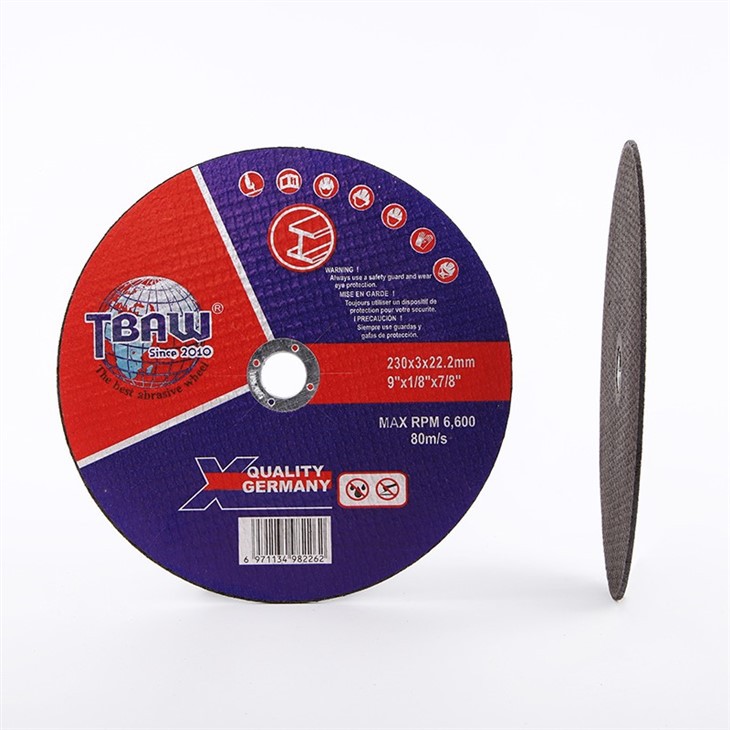
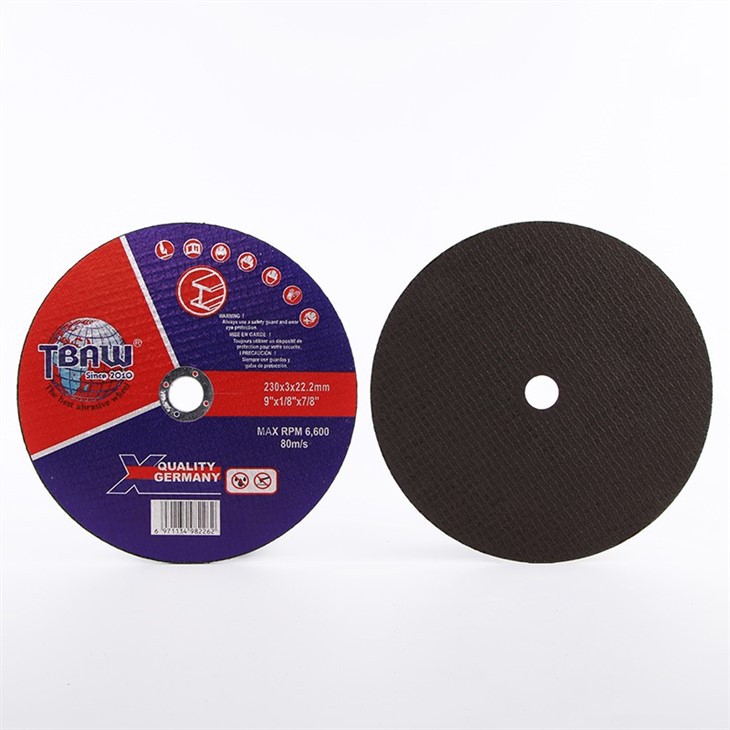
At our company, we offer a wide range of 3M grinding discs with different coefficients of friction to meet the needs of various applications. Our Iron Cutting Disc is designed for cutting and grinding iron and steel. It has a high coefficient of friction, which allows for fast and efficient material removal.
Our Super Thin Cutting Wheel is ideal for precision cutting and grinding applications. It has a low coefficient of friction, which helps to produce a smooth and accurate finish.
For general metal grinding applications, our Grinding Wheel for Metal is a popular choice. It offers a good balance between grinding efficiency and surface finish, with a moderate coefficient of friction.
Conclusion
The coefficient of friction is a critical factor that affects the performance of 3M grinding discs. It influences grinding efficiency, heat generation, surface finish, and application suitability. By understanding the role of the coefficient of friction and choosing the right grinding disc for the job, you can achieve optimal results in your grinding operations.
If you're interested in learning more about our 3M grinding discs or have any questions about their performance, please don't hesitate to contact us. We're here to help you find the best solution for your specific needs.
References
- ASTM International. (2021). Standard Test Methods for Determining Friction and Wear Properties of Materials. ASTM D4171-19.
- Callister, W. D., & Rethwisch, D. G. (2018). Materials Science and Engineering: An Introduction. Wiley.
- Schey, J. A. (2019). Tribology in Metalworking: Friction, Lubrication, and Wear. CRC Press.


