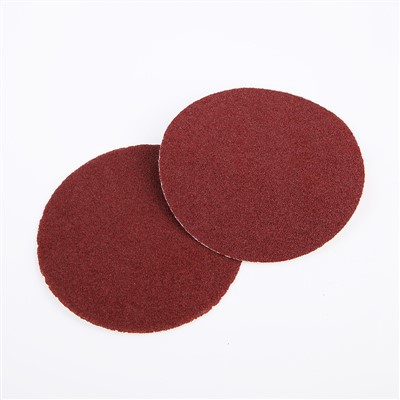
The thickness of a Velcro disc is a critical factor that can significantly influence its performance, durability, and suitability for various applications. As a leading supplier of Velcro discs, we understand the importance of providing our customers with in - depth knowledge about these products. In this blog, we will explore the standard thickness of Velcro discs, the factors that affect it, and how to choose the right thickness for your specific needs.
Understanding Velcro Disc Basics
Before delving into the standard thickness, it's essential to understand what a Velcro disc is. A Velcro disc, also known as a hook - and - loop sanding disc, is a popular abrasive tool used in woodworking, metalworking, automotive refinishing, and other industries. It features a Velcro backing that allows for quick and easy attachment and removal from a compatible sanding pad or tool. This design provides convenience and efficiency, enabling users to change discs rapidly during the sanding or polishing process.
Standard Thickness of Velcro Discs
The standard thickness of Velcro discs can vary depending on the type of disc and its intended application. Generally, most common Velcro discs have a thickness ranging from 0.8mm to 3mm.
For Velcro Polishing Discs, which are used for achieving a smooth and shiny finish on surfaces, the thickness often falls in the range of 0.8mm to 1.5mm. These thinner discs are more flexible, allowing them to conform to curved or irregular surfaces easily. They are also less likely to cause excessive material removal, making them ideal for fine - finishing tasks.
On the other hand, Diablo Velcro Sanding Disc, which are designed for more aggressive sanding and material removal, typically have a thickness between 1.5mm and 3mm. The extra thickness provides greater durability and stability, allowing the disc to withstand the higher pressures and forces involved in heavy - duty sanding operations.
Factors Affecting the Thickness of Velcro Discs
1. Abrasive Material
The type of abrasive material used on the disc can influence its thickness. For example, discs with a ceramic abrasive tend to be thicker because ceramic abrasives are more aggressive and require a sturdier backing to support them. In contrast, discs with a silicon carbide abrasive may be thinner as they are generally used for finer sanding and polishing tasks.
2. Application
The specific application for which the Velcro disc is intended plays a crucial role in determining its thickness. If the disc is used for sanding large, flat surfaces, a thicker disc may be more suitable as it can maintain its shape and stability under the pressure of the sanding operation. However, for sanding intricate details or curved surfaces, a thinner and more flexible disc is often preferred.
3. Durability Requirements
If the disc needs to withstand long - term use and high - intensity sanding or polishing, a thicker disc is usually a better choice. Thicker discs are less likely to wear out quickly, reducing the frequency of disc changes and increasing overall productivity.
Choosing the Right Thickness for Your Needs
1. Consider the Surface
When selecting a Velcro disc, consider the surface you will be working on. For soft materials such as wood or plastic, a thinner disc may be sufficient for achieving a smooth finish. However, for hard materials like metal or stone, a thicker disc may be required to handle the greater resistance and achieve effective material removal.
2. Evaluate the Task
Assess the nature of the sanding or polishing task. If you are performing a light - duty task such as removing a thin layer of paint or polishing a surface, a thinner disc will work well. For heavy - duty tasks like sanding down rough edges or removing rust, a thicker disc is more appropriate.
3. Check Compatibility
Ensure that the thickness of the Velcro disc is compatible with your sanding tool. Some tools may have specific requirements regarding the disc thickness to function optimally. Refer to the tool's manual or consult with the manufacturer if you are unsure.


Popular Types of Velcro Discs and Their Thickness
1. Velcro Disc Round Sanding
These round - shaped Velcro discs are widely used in various sanding applications. The thickness of round sanding Velcro discs can range from 1mm to 2.5mm, depending on the grit size and the intended use. Coarser grit discs are usually thicker to handle the more aggressive sanding process, while finer grit discs may be thinner for precision sanding.
2. 5 Inch Velcro Sanding Discs
5 - inch Velcro sanding discs are a common size in the market. They are available in different thicknesses, typically from 1.2mm to 2.8mm. The choice of thickness depends on whether you are using them for light - duty or heavy - duty sanding tasks.
3. Stick On Sanding Discs Velcro
These discs are designed to be easily attached to a sanding pad. Their thickness can vary from 0.9mm to 2.2mm, with thinner discs being more suitable for delicate sanding jobs and thicker discs for more robust applications.
Importance of Standard Thickness
Maintaining a standard thickness in Velcro discs is essential for several reasons. Firstly, it ensures consistent performance across different batches of products. Customers can expect the same level of quality and functionality every time they purchase our Velcro discs. Secondly, standard thickness allows for better compatibility with sanding tools. Since most sanding tools are designed to work with discs of a certain thickness range, using discs that meet the standard ensures smooth operation and optimal results.
Conclusion
The standard thickness of a Velcro disc can vary based on its type, abrasive material, application, and durability requirements. As a supplier, we offer a wide range of Velcro discs in different thicknesses to meet the diverse needs of our customers. Whether you need a thin, flexible disc for fine - finishing or a thick, durable disc for heavy - duty sanding, we have the right product for you.
If you are interested in learning more about our Velcro discs or wish to discuss your specific requirements, we encourage you to contact our sales team. We are committed to providing you with the best products and services to help you achieve excellent sanding and polishing results.
References
- Woodworking Machinery and Supply Handbook
- Metalworking Abrasives Guide
- Automotive Refinishing Techniques Manual