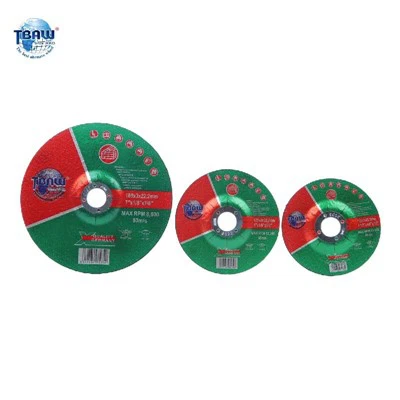
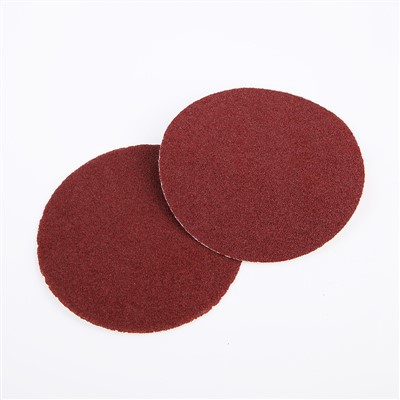
Can 4 1/2 Grinding Discs be used for concrete grinding?
As a supplier of 4 1/2 grinding discs, I often receive inquiries from customers about the suitability of these discs for concrete grinding. This question is crucial because using the wrong grinding disc can lead to inefficient work, damage to the tool, and even pose safety risks. In this blog post, I will delve into the technical aspects of 4 1/2 grinding discs and explore whether they can be effectively used for concrete grinding.


Understanding 4 1/2 Grinding Discs
4 1/2 grinding discs, also known as 4.5 - inch grinding discs, are a popular choice in the market due to their versatility and compatibility with a wide range of power tools, especially angle grinders. These discs come in various types, including Resin Grinding Disc, which are made of resin - bonded abrasives. The resin bond provides a certain degree of flexibility and can hold the abrasive grains firmly in place during the grinding process.
The abrasive materials used in 4 1/2 grinding discs can vary. Common abrasives include aluminum oxide, silicon carbide, and diamond. Each abrasive has its own characteristics and is suitable for different applications. For example, aluminum oxide is a general - purpose abrasive that is relatively inexpensive and can be used for grinding a variety of materials, including metals and some types of stone. Silicon carbide is a harder abrasive and is often used for grinding non - ferrous metals and ceramics. Diamond abrasives are the hardest and are ideal for grinding hard materials such as concrete and stone.
Concrete Grinding Requirements
Concrete is a hard and dense material, and grinding it requires a grinding disc with specific properties. First of all, the abrasive needs to be hard enough to cut through the concrete. Diamond abrasives are the most suitable for this task because they have the highest hardness among all abrasives. They can effectively remove the surface layer of the concrete, smooth rough surfaces, and expose the aggregate for decorative purposes.
Secondly, the grinding disc needs to have good heat resistance. Grinding concrete generates a significant amount of heat, and if the grinding disc cannot withstand high temperatures, the abrasive grains may break off prematurely, reducing the grinding efficiency and shortening the lifespan of the disc. A well - designed resin bond can help dissipate heat and keep the abrasive grains intact.
In addition, the grinding disc should have a proper grit size. A coarser grit is suitable for initial rough grinding to remove a large amount of material quickly, while a finer grit is used for finishing to achieve a smooth surface.
Can 4 1/2 Grinding Discs be Used for Concrete Grinding?
The answer is yes, but with some conditions. If the 4 1/2 grinding disc is a diamond - impregnated disc, it can be very effective for concrete grinding. Diamond 4 1/2 grinding discs are specifically designed to handle the hardness of concrete. They can be used for tasks such as removing old coatings, leveling uneven concrete surfaces, and preparing the surface for further treatment.
However, not all 4 1/2 grinding discs are suitable for concrete grinding. For example, aluminum oxide or silicon carbide discs may not be able to cut through concrete effectively because they are not hard enough. Using these discs on concrete will result in slow grinding speed, excessive wear of the disc, and may even damage the power tool.
When choosing a 4 1/2 grinding disc for concrete grinding, it is important to consider the following factors:
- Abrasive Type: As mentioned earlier, diamond is the best choice for concrete grinding. Make sure the disc you choose is diamond - impregnated.
- Grit Size: Select a grit size based on the specific task. For rough grinding, a coarser grit (e.g., 20 - 40 grit) is recommended. For finishing, a finer grit (e.g., 80 - 120 grit) should be used.
- Quality of the Disc: Choose a high - quality disc from a reputable manufacturer. A good quality disc will have a uniform distribution of abrasive grains and a strong resin bond, which ensures better performance and longer lifespan.
Advantages of Using 4 1/2 Grinding Discs for Concrete Grinding
- Portability: 4 1/2 grinding discs are relatively small and lightweight, making them easy to carry and use in different locations. They are especially suitable for small - scale concrete grinding projects, such as grinding the edges of a concrete slab or working in confined spaces.
- Compatibility: These discs are compatible with most angle grinders, which are commonly available power tools. This means that users do not need to invest in specialized equipment for concrete grinding.
- Cost - effectiveness: Compared to larger grinding discs, 4 1/2 grinding discs are generally more affordable. This makes them a cost - effective option for small - to - medium - sized concrete grinding jobs.
Other Related Grinding Discs
In addition to 4 1/2 grinding discs, there are other types of grinding discs that may be relevant to concrete grinding or other applications. For example, 5 Inch Grinding Wheels are slightly larger than 4 1/2 discs and can cover a larger area during grinding. They are often used for more extensive concrete grinding projects.
4 Inch Metal Grinding Wheel is designed specifically for grinding metals. Although it is not suitable for concrete grinding, it is an important tool in metalworking industries.
Grinding Wheel for Power Tools is a general term that includes various types of grinding wheels for different power tools. These wheels are available in different sizes and abrasive materials to meet different application requirements.
Angle Grinder Wheel is a key component of angle grinders. It is designed to work with the high - speed rotation of angle grinders and can be used for a variety of grinding tasks, including concrete grinding if it is a diamond - impregnated wheel.
Conclusion
In conclusion, 4 1/2 grinding discs can be used for concrete grinding, but only if they are diamond - impregnated and meet the specific requirements of concrete grinding. These discs offer several advantages, such as portability, compatibility, and cost - effectiveness. When choosing a 4 1/2 grinding disc for concrete grinding, it is essential to consider the abrasive type, grit size, and quality of the disc.
If you are interested in purchasing high - quality 4 1/2 grinding discs or other related grinding products for your concrete grinding projects, please feel free to contact us for more information and to discuss your specific needs. We are committed to providing you with the best products and services to meet your grinding requirements.
References
- "Grinding Technology: Theory and Applications of Machining with Abrasives" by Stephen Malkin.
- "Handbook of Abrasive Technology" by Robert A. Schmitz.