


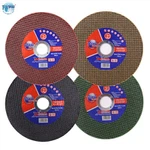

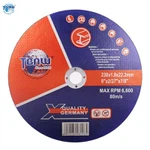

Angle Grinder Wheel
Dimension DxTxH(mm): 125X6X22.2
What is Angle Grinder Wheel
An angle grinder wheel is a type of abrasive wheel that is used with an angle grinder. It is typically made of a hard material, such as diamond or silicon carbide, and is designed to remove material from a workpiece by grinding or cutting.Angle grinder wheels come in a variety of shapes and sizes, and are used for a wide range of tasks, such as grinding metal, cutting concrete, and sharpening tools. They can be used for both rough and fine grinding, depending on the type of wheel and the task at hand.
Why Choose Us
Reliable Product Quality
Seiko workshop,constant temperature all year round. For the stability of the raw material of the product,adhesive force has an important guarantee,to ensure the product quality more stable.
Rich Experience
A professional manufacturer of cutting wheels, grinding wheel and Flap disc for over 20 years experience. A good abrasive manufacturer delivers quality abrasive products that meet or exceed industry standards.
Range of Products
The more products a manufacturer offers, the more options they provide to their customers to choose the perfect abrasive that meets their specific needs.
Delivery Options
Our sales team will be in charge of customer service. If there're any questions about products, you will not only get a quick response from us but also track the process of planning, production, QC, shipment in different stages.


Advantages of Angle Grinder Wheel
Angle grinder wheels offer several advantages, here are some of them:
Versatility: Angle grinder wheels can be used for a wide variety of tasks, including grinding, cutting, and polishing various materials like metal, stone, and concrete.
Efficiency: They can quickly remove material, making them a time-saving tool for many projects.
Precision: With the right wheel, you can achieve a high level of precision and detail in your work.
Portability: Angle grinders are relatively small and lightweight, making them easy to transport to different job sites.
Cost-effective: Compared to other tools, angle grinder wheels are relatively inexpensive and can be used for multiple tasks.
Easy to replace: When a wheel becomes worn or damaged, it's usually straightforward to replace it with a new one.
Angle grinder wheels are divided into two types: abrasive wheel types and grinding wheel types. They are each designed for specific applications, but what are they, and just how do they differ from one another?
Abrasive Wheels
Abrasive wheels are used for cutting and shaping materials. They are made from abrasive particles and they are designed to quickly remove material and provide precise cuts. Common types of abrasive wheels include cutoff wheels, diamond wheels, etc.
Grinding Wheels
Grinding wheels are used for grinding, sharpening, and smoothing surfaces. Grinding wheels are available in different shapes and sizes to accommodate various tasks, such as surface grinding, cylindrical grinding, and tool sharpening.

Key Differences
The main difference between abrasive wheels and grinding wheels lies in their intended purposes. Abrasive wheels are primarily used for cutting while grinding wheels are designed for grinding and smoothing surfaces.
We have gathered here a list of different and useful angle grinder wheels and discs, for both abrasive wheels and grinding wheels. If you are eager to get the most out of your angle grinder and maximize efficiency and productivity, be sure to read this article and get more information.
The capability and type of an abrasive wheel are determined by the type of material and the bonding agent that was used in it. It needs to be able to resist the high friction rates, the shock, and the high temperatures as well.
We have prepared a list of different abrasive wheel types for you, to help you pick the wheel that will turn your project around!
1-Cut-off Discs
The second-most-used wheel for angle grinders is the cut-off disc. As the name clearly indicates, cut-off discs are used for cutting metal bars and sheets. Compared to grinding wheels, cut-off wheels are thinner in order to deliver the most accurate cuts. This is why working with them is more dangerous. If you suddenly change the position of angle grinders or use them in a position that makes them bend, they shatter easily. The flying small parts of a shattered cutting wheel are hazardous and can result in serious damage. Therefore, you should use high-quality safety gear when trying to cut with an angle grinder. Ronix cut-off discs are made from the highest-quality materials, which makes working with them safer compared to low-quality discs.
Usages:
You can use cut-off discs for cutting metal bars, metal tubes, and small pieces of metal sheets and plates. You can also cut out welds with them. For shortening the length of various bolts, it is also a good idea to use an angle grinder and a cut-off wheel.
2- Flap Discs
Flap Discs and grinding discs share a lot of similarities. The difference is that, unlike grinding discs, flap discs are mostly used for finishing. This is why they have a smoother nature. Again, just like grinding discs, flap discs come in different grits. The higher the number, the smoother a disc is.
Usages:
A flap disc is used to smooth a heavily grinded surface. It is also great at getting rid of burrs and scratches. Burrs and scratches are sharp, and if one touches them without protection (for example, a safety glove), the result is painful cuts. Additionally, you can chamfer, take the sharp edges off with them, and shine up gouged metal.
3- Wire Wheels
Wire wheels consist of a set of wires attached to a circle-shaped base. Similar to other angle grinder discs, wire wheels are produced in different shapes and sizes because they are used for different purposes. If a wire wheel has thick, twisted bristles, it is considered more abrasive and is able to get the job done faster and easier. On the other hand, thinner and straighter bristles are considered less aggressive and are used for finer jobs.
Usages:
If you want to remove rust from a workpiece, one of the fastest and easiest ways to achieve a clean surface is by using a wire wheel. These angle grinder attachments are also used to get the paint off of a surface.
4- Diamond Cutting Discs
Diamond cutting discs are undoubtedly the sharpest among angle grinder discs. These wheels have diamonds fixed on the surface of their edges. They normally have a cutting rim where the cutting process is done. The higher the cutting rim, the more durable they are and the longer you can use them. Ronix produces diamond cutting discs with a 10mm cutting rim that are efficient and extremely resistant.
Usages:
Because of their diamond edges, the diamond cutting discs are suitable for cutting resistant and hard-to-penetrate materials like all types of granite. They are also used for both dry and wet cutting operations.
5- Polishing Pads
If you want a finished and shiny surface, then attaching polishing pads to your angle grinder can get you what you want. The name itself is self-explanatory; with a polishing pad, you can gently polish your desired surface. Just like any other attachment for angle grinders, polishing pads are produced in a wide range of shapes and materials that can each create a unique finished look. Be sure to use polishing pads on an angle grinder that has a speed control switch. Because polishing requires a specific speed, not all angle grinders are suitable for polishing tasks.
Usages:
For making the surface of a metal workpiece shiny, polishing pads are the right accessory for you! This is why polishing pads are widely used in auto body shops.
How do I Select the Correct Size for an Angle Grinder Wheel?
Selecting the correct size for an angle grinder wheel involves considering the following factors:
Angle Grinder Specifications
Check the manufacturer's specifications for your angle grinder model. It will list the maximum and minimum diameter of wheels compatible with the grinder. Ensure the wheel you choose falls within these limits.
Wheel Diameter
The diameter of the wheel must match the spindle size of your angle grinder. Common sizes include 4 inches (100mm), 4½ inches (115mm), 5 inches (125mm), 6 inches (150mm), 7 inches (180mm), and 9 inches (230mm).
Arbor Size
The arbor size is the diameter of the shaft that fits into the grinder. It must match the bore size of the wheel. Common arbor sizes are ⅝ inch (11mm) and ½ inch (16mm). Some wheels have a threaded arbor to fit into a threaded hole on the grinder spindle.
Thickness and Aperture
The thickness of the wheel (measured from one edge to the other) should match the wheel's rating for the specific task. The Aperture (the hole in the center of the wheel) should correspond to the arbor size of your grinder.
Type of Work
Different applications require different wheel types, such as cutting, grinding, deburring, or sanding. Each type of wheel has a specific grain size and bond that is optimized for the task at hand.
Safety Standards
Always ensure the wheel complies with national and international safety standards, such as ANSI in North America or EN in Europe. Look for markings indicating compliance on the wheel packaging.
Can I use Any Type of Wheel on My Angle Grinder?
While angle grinders are designed to be compatible with a variety of wheels, it's not a good idea to use just any type of wheel. Different wheels are designed for specific materials and tasks, and using the wrong wheel can lead to poor performance, damage to the tool, or even injury.
It's important to choose the right wheel for the job based on the material you're working with and the type of operation you need to perform. For example, if you're cutting metal, you'll want to use a wheel specifically designed for that purpose, such as a cutoff wheel. Grinding wheels are better suited for tasks like removing rust or shaping metal.
When selecting a wheel, make sure it's the correct size for your angle grinder and that it's rated for the speed of your tool. Also, check the manufacturer's recommendations to ensure the wheel is compatible with the material you'll be working on.

What Does the K Number on a Grinding Wheel Mean?
The "K" number on a grinding wheel refers to the wheel's type of abrasive grain bond. This designation is part of a standardized coding system used to describe the characteristics of grinding wheels. The K number is followed by a numeral that indicates the hardness of the bond.
Here's how the K number system works:
- The letter "K" stands for a vitrified bond, which is a type of bond made from a mixture of clay and other minerals that are fused together by heating to form a glass-like structure. Vitrified bonds are common in many grinding wheels because they can hold the abrasive grains firmly while still allowing for efficient grinding.
- After the "K," a numeral ranging from 1 to 9 follows. This numeral represents the hardness of the bond. A higher number indicates a harder bond, which means the abrasive grains are held more tightly and will wear away more slowly. Conversely, a lower number signifies a softer bond, where the abrasive grains will wear away faster, but this allows for quicker removal of material from the workpiece.
For example, a grinding wheel labeled as "K70" has a vitrified bond that is relatively hard, suitable for applications where the wheel must last longer and wear less quickly. On the other hand, a wheel labeled "K15" has a softer bond that will wear away faster but may be better suited for aggressive grinding or when changing wheels frequently is acceptable.
Choosing the appropriate K number is critical for the efficiency and longevity of the grinding process. A harder bond is typically used for harder materials or when a finer finish is required, while a softer bond might be chosen for softer materials or when a rougher finish is acceptable.
Remember that the K number is just one aspect of the grinding wheel's specification. Other factors such as grain size, grain type, and overall diameter are also important in selecting the right wheel for a given application.
What Safety Precautions Should I Take When Using an Angle Grinder Wheel?
Wear appropriate protective equipment
Always wear eye protection, such as goggles or a face shield, and a dust mask to protect your lungs from harmful particles. Hearing protection may also be necessary depending on the noise level of the grinder.
Inspect the wheel before use
Check the wheel for cracks, chips, or other damage before using it. Replace any damaged wheels immediately.
Secure the workpiece
Use clamps or other holding devices to secure the workpiece firmly in place to prevent it from moving or slipping during grinding.
Use the right wheel for the job
Choose a wheel that is appropriate for the material you are grinding and the type of operation you are performing. Using the wrong wheel can cause the wheel to break or fly apart, causing injury.
Start the grinder slowly
When starting the grinder, turn it on slowly to avoid sudden movement or kickback.
Keep your hands away from the wheel
Keep your hands at least 6 inches away from the wheel when it is in motion to avoid injury.
Do not use excessive force
Applying too much pressure to the wheel can cause it to overheat and crack, or even explode.
Store wheels properly
Store wheels in a dry, cool place away from direct sunlight and other sources of heat. Do not stack wheels on top of each other or store them near flammable materials.
Follow the manufacturer's instructions
Always follow the manufacturer's instructions for operating and maintaining your angle grinder and wheels.
What does an Angle Grinder Do?
An angle grinder, also known as a disc grinder or side grinder, is a versatile power tool designed for cutting, grinding, sanding, and polishing various materials. It consists of a gear motor that drives a circular abrasive wheel or disc. The motor rotates the disc at high speeds, providing the cutting or grinding action.
The key features of an angle grinder include:
1. Disc Size: Angle grinders come with various disc diameters, typically ranging from 4 to 9 inches (100 to 230 mm). Larger discs are capable of handling heavier-duty tasks and larger workpieces, while smaller discs are more maneuverable for precision work.
2. Power: Angle grinders are available in different power ratings, usually measured in amps or watts. Higher power ratings indicate the ability to handle tougher materials and more demanding applications.
3. Speed: The speed of the disc is measured in revolutions per minute (RPM). Some angle grinders offer variable speed settings to adapt to different materials and tasks.
4. Side Handle: Many angle grinders feature a side handle that provides additional control and stability during use, especially for heavy-duty operations.
Angle grinders are commonly used in construction, metalworking, automotive repair, and DIY projects to perform tasks such as:
- Cutting through materials like metal, stone, tile, and concrete.
- Grinding down welds, removing rust, and preparing surfaces for painting.
- Sanding wood, drywall, and metal to smooth surfaces or remove finishes.
- Polishing metals and other materials to achieve a shiny finish.
Safety precautions when using an angle grinder include wearing appropriate personal protective equipment (PPE) such as safety goggles, gloves, hearing protection, and a dust mask. Additionally, ensuring the work area is clear of debris, using the correct disc for the material being worked on, and keeping the grinder securely attached to the workpiece are essential to prevent accidents and injuries.

How do I Know if an Angle Grinder Wheel is Damaged?
To determine if an angle grinder wheel is damaged, inspect it carefully before use, looking for the following signs:
1. Cracks: Inspect the wheel for any visible cracks, especially along the edges. Cracks can weaken the wheel and potentially cause it to shatter during use.
2. Chips: Check for missing pieces or chips out of the wheel's surface. Chips can affect the balance of the wheel and lead to uneven grinding or breaking.
3. Roundness: Spin the wheel manually to check for wobble or roundness. An out-of-balance wheel can vibrate excessively, leading to premature wear and potential injury.
4. Dullness: If the abrasive grains appear to be worn down significantly and no longer sharp, the wheel's effectiveness will be reduced. While not necessarily a sign of damage, a dull wheel should be replaced for optimal performance.
5. Heat Damage: Look for discoloration or warping, which could indicate exposure to excessive heat. Heat can compromise the integrity of the wheel's bond, increasing the risk of failure.
6. Rust or Corrosion: Surface rust or corrosion can weaken the metal components of the wheel and should be addressed before use.
7. Loose or Missing Segments: If the wheel is segmented, make sure all segments are securely attached and none are missing.
8. Mounting Damage: Examine the hub and mounting holes for damage or deformation that could affect the wheel's ability to securely attach to the grinder.
If any damage is detected, the wheel should not be used. Continuing to use a damaged wheel poses significant safety risks, including the possibility of the wheel breaking and causing injury. Always replace damaged wheels with new ones that meet the specifications required for your angle grinder and the task at hand.

Zhejiang Wanna Industry&Trade Co.,Ltd was established in 1995. A professional manufacturer of cutting wheels, grinding wheel and Flap disc for over 20 years experience. our brand is "TBAW" which is upgraded in 2010. "TBAW" is the best abrasive wheels, to pursue the perfect combination of quality and appearance.

Hot Tags: angle grinder wheel, China angle grinder wheel manufacturers, suppliers, factory, grinding disc for automated manufacturing, grinding disc for wire edm, grinding disc for cnc machining, grinding disc for flexible manufacturing, grinding disc for galvanizing, grinding disc for reconfigurable manufacturing
You Might Also Like


Send Inquiry