


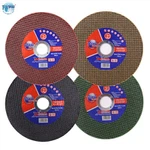

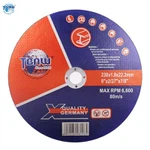
Calcined Alumina Flap Disc
What is Calcined Alumina Flap Disc
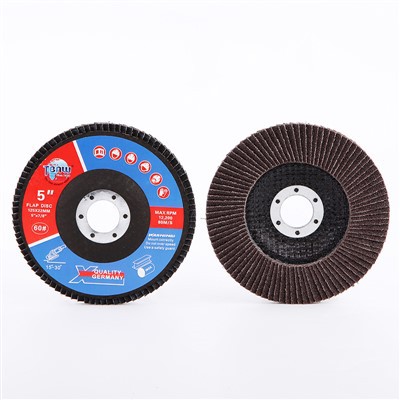
Alumina oxide zirconia calcined ceramic flap disc for angle grinder. Flap discs are created by overlapping coated abrasive flaps and adhering them firmly to a back-up plate. This design provides a cooler running, longer-lasting disc. And because new layers of abrasive are constantly being exposed, a very consistent finish is provided during the life of the disc. These discs are specifically recommended for high stock removal on stainless steel, carbon steel, aluminum, and most alloys. They offer many times the life of conventional resin fiber discs.
Advantages of Calcined Alumina Flap Disc
Longevity
Thanks to their layered construction, flap discs last longer than traditional sanding discs. As the outer layer of abrasives wears down, new abrasive surfaces are exposed, extending the disc's working life.
Less re-work
A flap disc will provide much more controlled stock removal. They are often lighter and cooler cutting (less glazing), which reduces the requirement for re-work.
Versatility In Finishing Tasks
Flap discs can be used for a wide range of tasks, from heavy grinding to fine finishing. By selecting the appropriate grit size, one can easily transition between aggressive material removal and achieving a smooth, polished surface without needing to switch tools.
High Performance For Curved Surfaces
The flexible nature of flap discs makes them particularly effective on curved and irregular surfaces. The abrasive flaps conform to the shape of the workpiece, ensuring even contact and consistent finishing quality across different shapes and contours.
Smoother Finish, No Gouging
In the same vein, grinding wheels are extremely aggressive and can have a tendency to gouge the surface and leave a very rough finish, particularly when in the hands of a less experienced user.
Whereas with a flap disc, the abrasive flaps are made from cloth or polyester, providing conformability to the disc, which reduces the possibility of damaging the workpiece whilst removing material effectively.
Fewer Vibrations
As the flap disc is less rigid and has far more flexibility than its grinding wheel counterpart, fewer vibrations are generated when grinding. Not only does this make for a drastically more comfortable experience for the operator but it is also significantly less noisy.

Why Choose US
Reliable Product Quality
Besides, we also have Authoritative standard laboratory, we have Chemical Analysis Room, Physical Exammination room, Abrasives testing room. Dozens of machines to control quality: Analiza material, Resin PH acid-stage, impurity element, Resin Voscosity, Grain composition, Abrasive toughness, corrosion resitance, fiberglass net elongation..., The machine to testing: speed, and side loading, side impact, was imported from Italy, which can meet the OAS and EN12413 European standard.
Rich Experience
A professional manufacturer of cutting wheels, grinding wheel and Flap disc for over 20 years experience. A good abrasive manufacturer delivers quality abrasive products that meet or exceed industry standards. The more products a manufacturer offers, the more options they provide to their customers to choose the perfect abrasive that meets their specific needs.
Production Equipment
- We have more than 100 automatic production lines.
One day output(day shift):
105-125(4"-5")small sizes:800000pcs
150-230(6"-9")middle size:200000pcs
300-400(12"-16")big sizes:100000pcs
Flap disc:100000pcs
- We have 4 tunnel kilns which controlled by computer. Automatic tunnel kiln will make the quality more stable and color more consistent.
- Authoritative standard laboratory
Chemical Analysis Room Physical Exammination Room Abrasives testing Room
Dozens of machines to control quality: Analize Material, Resin PH acid-stage, impurity element, Resin Voscosity, Grain composition, Abrasive toughness, corrosion resitance, fiberglass net elongation..., The machine to testing: speed, and side loading, side impact, was imported from Italy, which can meet the OAS and EN12413 European standard.
Our Service
About after-sales, if you want to take photo or video and describe the process of operation, then we will make quick analysis and judgment and offer the solution timely.
How to Choose Flap Disc
When choosing a flap disc, there are several important factors to consider.
Select the appropriate size of the flap disc that matches the size of your grinding or sanding tool. Common sizes range from 4.5 inches to 7 inches in diameter.
Flap discs come in different types, each designed for specific applications. The two primary types are:
Type 27: Flat flap discs with a slight angle on the grinding surface, suitable for surface grinding and blending.
Type 29: Conical flap discs with a larger angle on the grinding surface, ideal for aggressive grinding and stock removal.
Flap discs are available in various grit sizes, which determine the coarseness or fineness of the abrasive material. The choice depends on the task at hand:
Coarse Grit (40 to 60): Suitable for heavy material removal and rough grinding.
Medium Grit (80 to 120): Ideal for general-purpose grinding and blending.
Fine Grit (180 to 240): Used for finishing and smoothing surfaces.
Flap discs are made with different abrasive materials, each offering specific advantages:
Aluminum Oxide: Suitable for most metals and wood, providing good performance and cost-effectiveness.
Zirconia Alumina: Offers long life and high stock removal rates, making it ideal for heavy-duty applications on metals.
Ceramic Alumina: Provides exceptional performance and durability, making it suitable for hard metals and stainless steel.
The backing material of a flap disc affects its durability and flexibility. Common backing options include fiberglass, plastic, and metal. Fiberglass backing is widely used due to its strength and flexibility.
Application: Consider the specific task you need the flap disc for. Different applications require different flap discs. For example, if you're working on stainless steel, a flap disc specifically designed for stainless steel will provide better results.
Check the the manufacturer's specifications for information on the expected disc life and performance. This will help you determine whether the flap disc meets your requirements for durability and efficiency.
Ensure that the flap disc you choose is compatible with your grinding/sanding tool and adheres to safety standards. Look for reputable brands and check for any safety certifications or markings.
Remember to always follow the manufacturer's recommendations and safety guidelines when using flap discs or any other abrasive tools.
How to Use Flap Disc


Before You Begin: Safety Precautions
Safety is paramount when working with flap discs. These powerful tools, while efficient, can pose risks if not used properly. Adhering to safety guidelines ensures both the operator's well-being and the integrity of the work.
Personal Protective Equipment (ppe)
- Eye protection: Always wear safety goggles or face shields to protect against flying debris.
- Hand protection: Durable gloves should be worn to protect hands from abrasions and cuts.
- Hearing protection: Earplugs or earmuffs are recommended due to the high noise levels during grinding.
- Respiratory protection: Use a dust mask or respirator, especially when working with materials that generate hazardous dust.
- Body protection: Wear long sleeves and sturdy work clothes to shield the body from sparks and debris.
Safe Operating Practices
- Inspect the flap discs: Before use, check for any signs of damage or wear. Do not use a disc that appears compromised.
- Ensure proper installation: Mount the disc correctly and securely on the grinder. Improper installation can lead to disc detachment or breakage.
- Check compatibility with the grinder: Verify that the disc is suitable for the speed and size of your grinder.
- Maintain a safe work area: Keep the area clear of flammable materials and ensure it is well-ventilated.
- Use correct technique: Operate the grinder at the appropriate angle and pressure for the disc type. Avoid excessive force which can lead to disc damage or breakage.
- Be aware of surroundings: Keep bystanders at a safe distance, especially from the direction of potential debris ejection.
- Store flap discs properly: Keep them in a dry, secure place to prevent damage.
- Following these safety precautions not only helps prevent accidents but also extends the life of the flap discs, ensuring optimal performance during grinding tasks.
Preparing For Grinding With A Flap Disc
By selecting the right disc, setting up your grinder correctly, and preparing your workspace and workpiece, you can ensure efficient and safe grinding operations.
Selecting The Right Flap Disc For Your Project
Choose a flap disc compatible with the material of your workpiece (e.G., metal, wood). You'll also want to select the appropriate grit size based on the type of grinding and decide between flat (type 27) or conical (type 29) discs based on your grinding angle and surface shape. The last step is to consider the best abrasive material (e.G., ceramic, zirconia) for your specific task requirements.
Setting Up The Grinder And Attaching The Flap Disc
Ensure your grinder is in good working condition, with no defects. Attach the flap disc firmly to the grinder, making sure it is centered and secured, and perform a test run of the grinder with the flap disc attached to check for any imbalances or unusual vibrations.
Checking The Workpiece And Workspace Preparation
Examine the workpiece for any defects or foreign objects that may affect grinding. Then securely clamp it to prevent movement during grinding. Remove any flammable materials and ensure the workspace is clean and well-ventilated.
Using The Flap Disc For Grinding
Allow the grinder to reach its full operational speed before starting at a consistent, moderate pressure. For type 27 discs, use a 0 to 15-degree angle for smooth finishing on flat surfaces. For type 29 discs, use a 15 to 35-degree angle for more aggressive grinding on both flat and contoured surfaces. Apply consistent, moderate pressure and avoid excessive force, which can damage the disc and the workpiece. Move the grinder smoothly across the surface without lingering too long in one spot to prevent gouging.
Tips For Maintaining Control And Achieving Desired Results
- Keep your attention on the grinding area to maintain control.
- If you notice uneven wear or ineffective grinding, adjust your angle or pressure.
- Periodically check the disc for wear and tear.
- Regular breaks prevent overheating of both the tool and the workpiece.
- After grinding, clean the surface to assess progress and ensure a smooth finish.
Flap disc are primarily used for polishing and grinding in light industry, wood products, furniture, hardware, automotive, textiles, jewelry, machinery, shipbuilding, aviation, and other fields. They are effective for tasks such as polishing, weld grinding, paint and rust removal, deburring, and chamfering surface finishing. These disc are used in conjunction with electric (pneumatic) angle grinders.
First, let's deconstruct a flap disc; It consists of two main parts: The abrasive cloth and the backing plate, which are bonded together with an adhesive. Currently, the vast majority of flap disc on the market are produced by machines, although a small portion still requires manual production. Handmade flap disc are primarily used for specialized grinding needs or where there are high demands on the quality of the flap disc. Typically, the flap disc we commonly use are produced by a flap disc machine.
The production process of a flap disc machine involves several essential steps. First, a slitting machine cuts the abrasive cloth into small rolls (the width of these rolls corresponds to the width of each abrasive leaf on the disc). Next comes the flap disc machine itself, which first grabs a Fiberglass Backing Pad and applies a circle of glue (Flap Disc Adhesive) to it. Then, it cuts the abrasive cloth and places it on the adhesive, thus forming a Flap Disc. At this point, the disc is not yet ready for use because the Flap Disc Adhesive has not been dried.
Aluminum Oxide Vs Zirconia Flap Disc
Flap discs are rough wheels built by the covering "flaps" of fabric sanding strips. Each strip utilized in the wheel is covered with grating that gets taken out and uncovered new grains on each flap to grow the instrument's life. Flap plates are mostly utilized with point processors and pass-on processors. Normal flap discs utilize incorporate pounding, deburring, stock expulsion, mixing, and wrapping up. Concerning aluminum, they are an extraordinary apparatus to prepare for cleaning aluminum. Flap discs with different abrasive grains are used for different metals for example flap disc for wood incorporates ceramic abrasive, metal flap discs use zirconia, etc.
Benefits Of Flap Discs
- Conservative/minimal expense
- Durable
- Multi-reason
- Gentler on delicate metals, similar to aluminum
- Less vibration than pounding wheels
- A predictable pace of expulsion
- Lightweight
Aluminum Oxide Flap Disc
Alumina or aluminum oxide (al2o3) is utilized more regularly than any high-level fired material in its different immaculateness levels. Aluminum oxide flap discs are accessible in both coarse and fine-grained assortments. Instances of utilizations for aluminum oxide al2o3 progressed earthenware production are uncompromising shaping devices, substrates, and resistor centers in the gadgets business, tiles for wear assurance and ballistics, string guides in material designing, seal and controller plates for water taps and valves, heat-sinks for lighting frameworks, insurance tubes in warm cycles or impetus transporters for the synthetic compounds industry.
Zirconia Flap Disc
Zirconia flap disc is a high hotness obstruction apparatus and is considerably more grounded than aluminum oxide abrasives, making it a decent decision for high-pressure granulating and machining applications. Zirconia flap discs for metal works best in the 24 to 120 coarseness range, are consistently utilized in steel creation shops.
Albeit harder than aluminum oxide, 220 grit flap disc with zirconia might experience issues crushing plant scale, however, they actually do a top-notch pounding position on:
- Tempered steel
- Apparatus steel
- Nickel compound
- Aluminum
- Titanium
- Cast iron
- Carbon steel
- Edges, rotors, and welds
Zirconium is made by kick the bucket projecting and is, for the most part, accessible in coarser cornmeal up to 120. It is a coarse grain with a high hotness opposition and is significantly more grounded than aluminum oxide. You will normally discover zirconia abrasives in the scope of shadings, from light blues to dynamic greens. Zirconia is an extraordinary decision for high-pressure pounding and machining applications. It requires more strain to sand. The belts and sanding plates will perform better for harder surfaces and are not great for cleaning.
Major Components of Flap Disc
Flap discs are designed with six specific considerations in mind, and they are as follows
Disc shape: Flat, conical, and compressed
Flap discs are mainly available in three common shapes.
Flat flap disc or t27 disc- As the name suggests, these are used on flat surfaces for edge grinding and deburring.
Conical flap disc or t29 disc- These discs are perfect for surface conduct and aggressive grinding. They are also used for heavy stock removal in different grinding applications.
Compressed flap disc- This disc can perform both edge grinding and deburring as well as equally effective for heavy weld removal.
Bonding and backing materials
Poly-cotton fabric and polyester fabric are the two most common bonding and backing materials used in flap discs.
Backing plates: Fiberglass, plastic, and metal
Flap disc backing plates are typically made of three main components: Plastic, metal, and fiberglass.
Flap density
The total amount of abrasive area used by the flap on the disc is known as the flap density. The number of flaps used, the angle at which they are used, and the space between flaps all affect the size of the abrasive area. Low-density flap disc is good for heavy-duty applications and fast stock removal, while high-density flap discs are perfect for working on curved and irregular surfaces.
Grain types
Flap discs are designed with different types of abrasives including ceramic, zirconia, and aluminum oxide grains. You can choose the grain material according to your application requirement.
Abrasive grit and disc size
Abrasives are available in various grit range from coarse, to medium and fine. A high grit number means a small abrasive grain. Similarly, a low grit number means a large abrasive grain. For fine abrasive products choose high grit or small grain size. Flap disc with coarse abrasive grit is perfect for heavy stock removal and aggressive grinding. And, flap disc with medium or fine abrasive grit is perfect for deburring, mixing, and finishing applications.
Do's and Don'ts of Flap Discs
Proper Grinding Angle and Surface
It is important to use flap discs at the correct angle and on the correct surface. Using the incorrect angle or surface can cause epoxy wear, backing disc damage, or snagging. All of these can lead to separation of the flaps or backing disc breakage. Type 27 flap discs should be used at 0°-15° angle and Type 29 flap discs should be used at 15°-25° angle to the workpiece. Do not use flat or on the edge.
Guards
There is a common misconception that guards are not required when using coated abrasive products. This is simply not true. ANSI B7.7 Safety Requirements for Abrading Materials with Coated Abrasive Systems very clearly states that "If the machine is designed and equipped with guards, it shall not be operated without the guards properly installed and in place." Flap discs are designed for use on angle grinders, which come equipped with guards. In addition, the 2017 revision of ANSI B7.1 Safety Requirements for the Use, Care and Protection of Abrasive Wheels makes specific mention of requirements for flap disc wheels: "Type 27 and 29 abrasive flap disc wheels are subject to all limitations of mounting and use listed for Type 27 wheels." B7.1 goes on further to state, "These wheels are recommended only for use on specially designed and guarded machines." Make sure your grinder has the proper guard, that it is in good condition, and that it is positioned between you and the disc. Should a breakage or flap separation occur, the guard is designed to contain the pieces and protect you from injury. Never use a grinder without a guard!
Inspection/Handling
Inspect flap discs for any signs of damage prior to using. A disc that has been dropped or otherwise mishandled can be damaged, which can lead to breakage. Do not use a disc that has been dropped or damaged.
▲Other Do's and Don'ts
- Do store abrasive flap discs at the recommended 40-50% relative humidity and 60-80° F (15 to 29° C). Store in their original containers, keeping them away from water or other fluids.
- Do rotate stock. Use flap discs on a first in, first out basis.
- Do comply with ANSI B7.7, OSHA, and all safety materials provided with the flap discs, machines, and the tools.
- Do disconnect the tool from the power supply before changing a flap disc.
- Do match flap disc size with grinder/sander (e.g. 7" flap disc for a 7" grinder/sander).
- Do check machine speed against established safe operating speed marked on the flap disc. Never exceed the rated speed of a flap disc.
- Do wear proper personal protection such as ANSI approved impact-resistant eye and face protection, arm guards, apron, gloves, safety shoes, hearing protection, etc. The use of a respirator is required where harmful materials may be produced by the operation, such as wood dust, toxic metal particles, etc.
- Do test run your flap disc in an enclosed area such as a barrel at operating speed for one full minute before using it.
- Do use side handle when furnished with your angle grinder/sander.
- Do review all applicable SDS (Safety Data Sheets) before using this product. Safety data sheets for Norton flap discs can be found using the SDS finder.
▲Don'ts
- Don't use on pistol grip air sanders or any other improper tool.
- Don't store abrasive flap discs on concrete floors, near open windows, in direct sunlight, or near heat sources such as radiators or steam pipes.
- Don't wear any loose clothing, jewelry, or any item that may snag onto moving equipment.
- Don't exceed the maximum RPM marked on the flap disc.
- Don't install a flap disc onto a machine NOT in good working condition.
- Don't jam the flap disc into a workpiece.
- Don't create a hazard. Shield any nearby bystanders and any flammable materials from the spark/debris stream (shower).
- Don't allow the flap disc to "load up" with the material you are abrading.