


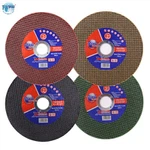

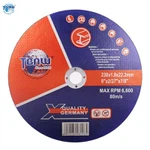
Metal Cutting Disc
Why Choose Us
Reliable Product Quality
Seiko workshop,constant temperature all year round. For the stability of the raw material of the product,adhesive force has an important guarantee,to ensure the product quality more stable.
Rich Experience
A professional manufacturer of cutting wheels, grinding wheel and Flap disc for over 20 years experience. A good abrasive manufacturer delivers quality abrasive products that meet or exceed industry standards.
Range of Products
The more products a manufacturer offers, the more options they provide to their customers to choose the perfect abrasive that meets their specific needs.
Delivery Options
Our sales team will be in charge of customer service. If there’re any questions about products, you will not only get a quick response from us but also track the process of planning, production, QC, shipment in different stages.
What is Metal Cutting Disc
Metal cutting disc is a blade or wheel that is specifically designed for cutting through metal materials such as steel, aluminum, and other metals. These discs are made from various materials such as abrasive grains, synthetic resin, and bonding agents that make them very efficient for cutting through metal objects and structures.


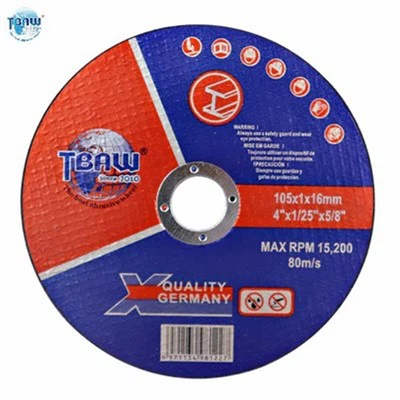


Advantages of Metal Cutting Disc
Excellent Cutting Performance
One of the main advantages of using a metal cutting disc for metal cutting is its superior cutting performance. , a superhard material, is known for its ability to cut a variety of materials with remarkable efficiency and precision.
Excellent Cutting Efficiency
Diamonds are often called the hardest known natural material and have extraordinary cutting abilities. When incorporated into cutting blades, they provide unparalleled efficiency. cutting discs cut through metal materials with ease, reducing the time and effort required for cutting tasks. Metal workers often encounter situations that require fast, precise cuts. In construction, for example, the ability to quickly cut metal beams or pipes can significantly impact project timelines. cutting discs perform exceptionally well in this situation, allowing for rapid progress.
Smooth, Clean Cuts
In addition to speed, the highly efficient metal cutting disc produces extremely smooth and clean cuts. This superior cut quality eliminates extensive post-cut finishing work, such as smoothing rough edges. The result is a finished product that meets high quality standards.
Extend Tool Life
Another compelling advantage of using cutting wheels for metal cutting is their ability to extend the life of the cutting tool. This longevity stems from the wear-resistant properties of , which significantly reduce wear on the cutting disc.
Minimize Material Waste
Metal cutting discs offer the advantage of minimal material waste during cutting operations. This advantage is particularly valuable in industries that focus on material conservation and environmental considerations.
Precision And Accuracy
Metal cutting discs are known for their cutting precision and accuracy. The ability to cut accurately minimizes material waste and ensures every piece of metal is used efficiently. This precision is especially important when using metals that are expensive or in limited supply.
Versatility for Cutting Applications
Metal cutting discs offer versatility in a variety of cutting applications. Whether you are working with various types of metal materials or handling a variety of cutting tasks, discs are adaptable and reliable.
Less Heat, Less Warping
Compared with traditional cutting methods, metal cutting discs generate less heat due to their superior cutting efficiency and reduced friction. This lower heat generation minimizes the risk of material deformation, a critical factor in industries where precise dimensions and structural integrity are critical.
Types of Metal Cutting Disc

Super Thin Cut Off Disc
Super thin cut off disc is a revolutionary cutting tool that has been specifically designed to deliver outstanding performance and precision. This cutting disc is crafted with high-quality materials that ensure durability, longer life, and excellent results. It is ideal for use on a wide range of materials, including metal, concrete, porcelain, and ceramic, among others.

Flat Cutting Disc
Our flat cutting discs are designed to offer smooth, precise and controlled cutting performance, making them ideal for use across a wide range of cutting applications. Whether you work in metal fabrication, construction, or automotive repair, our cutting discs are the perfect tool to help you work with greater precision and speed.

Abrasive Cutting Wheel
Our abrasive cutting wheel is made of high-quality materials, making it durable and long-lasting. It is designed to cut through various materials such as metal, steel, and aluminum, making it versatile and adaptable for various purposes. The cutting wheel is ideal for cutting, grinding, deburring, and polishing.

Diamond Cut Off Wheels
Our diamond cut off wheels feature a high cutting speed, which saves time and increases productivity for businesses. This means that merchants can increase the number of products they manufacture within a shorter period, ultimately leading to higher profitability.
Application of Metal Cutting Disc
General Fabrication
In general metal fabrication, 0.045-inch disc diameters are common choices. With thinner materials, an operator may want to choose a 1-millimeter disc instead for greater precision, less heat generation, and fewer burrs that will require removal before welding. The choice of grain will likely depend on the material composition of the workpiece — higher-performing grains for structural steel and difficult-to-cut metals, contaminant-free discs for stainless steel.
Pipe Fabrication
In metal pipe fabrication, the choice of cutting disc often depends on the diameter of the pipe to be cut. For a 3/4-inch or smaller pipe, a 4 1/2-inch diameter will usually be sufficient. For a pipe of up to 2 1/2 inches, a 6-inch cutting wheel is effective, and for a pipe of up to 3 1/2 inches, a 9-inch cutting wheel is often most suitable. It’s also advisable to choose the thinnest disc possible to minimize heat and friction and to use a type 1 disc for a deeper cut unless the application imposes a particular constraint. For larger pipe often found on the pipeline, a depressed-center cutting disc provides added clearance when working at a constrained angle, and 0.045-inch disc thickness is ideal for cutting applications in fabrication yards or on the right of way for field repairs.
Shipbuilding
When an operator is working on the confined, hard-to-access spaces of a ship, making a cutting disc last as long as possible is often a priority. For this reason, the operator will often want to choose a harder, potentially longer-lasting disc like BSP Ceramic. However, when operators must use air tools whose hoses have stretched over long distances to access difficult areas of the ship, the tools may be underpowered. In this case, discs with a soft bond will be ideal because they make it easier to maintain a fast cut. In shipbuilding, the work material often influences the cutting disc selection. When working with aluminum, an operator may want to select a cutting disc that will not load or gum up.
Welding Preparation
Preparing for welding typically involves exact metal cutting. With a basic cut-off operation, precision is not critical, but with complex work or repairs that need to preserve the initial aesthetic qualities of the material, precision can save time and money. Using a 0.045-inch cutting disc — a little more than a millimeter thick — is common in welding to allow for precise and accurate cuts. For precise cuts on thin sheet metal, profiles, and small diameter rods, a 1-millimeter UltraCut wheel will provide smooth cutting and exceptional control for clean, ultra-precise cuts.
Railways
Modern railways use hard-to-cut alloy steels, so a high-performance cutting disc is necessary for high-speed gas saws. A self-sharpening zirconia alumina grain that retains a high cutting performance throughout the life of the wheel offers excellent performance. The BSP Zirc 14- and 16-inch cutting wheels are designed specifically for high-speed gas saws and deliver the high-performance solutions needed to increase productivity and profitability.
Construction
Building and construction sites feature a wide variety of metal cutting applications. Operators often look for a disc that can do it all, from cutting off rebar to making long cuts on sheet metal. Many times, an aluminum oxide wheel provides the right mix of versatility, performance, and price.
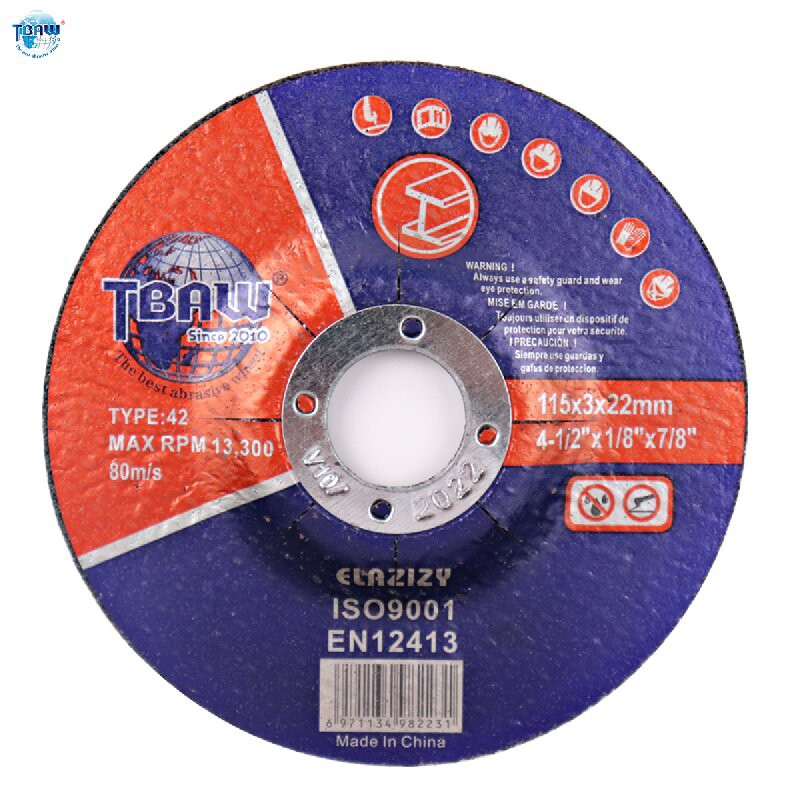
Grinding Material of Metal Cutting Disc
Aluminum Oxide is the most commonly used abrasive. Best-suited for general-purpose deburring and blending, it is tough, economical and fracture-resistant. It is commonly used on ferrous alloys, high-tensile materials, and wood.
Aluminum Oxide/Silicon Carbide blends are durable and are commonly used on steel parts with scale and iron castings.
Aluminum Oxide/Zirconia Alumina blends have a higher cut rate and longer life than aluminum oxide alone. Commonly used on stainless steel and exotic metals .
Ceramic provides a sharp, high purity grain that offers cooler cutting. Commonly used for precision grinding of steels, hard alloys and exotic materials. It is more durable than natural aluminum-based products.
Ceramic Alumina is suited for general purpose deburring and blending. It is commonly used on ferrous alloys and high tensile materials.
Silicon Carbide is a fast cutting abrasive that is harder than ceramic. It is commonly used on nonferrous metals and in low-pressure applications.
Zirconia Alumina is best for medium- to heavy-material removal. The very fine material grain microstructure constantly fractures to produce new sharp edges. It is used on carbon steels, aerospace alloys, forgings, some stainless steels and more.
Technical Details of Metal Cutting Disc
Disc Material
White alumina or white corundum (WA), aluminum zirconium oxide (Z), aluminum oxide (A) or silicon carbide (C).
Grain Size
Coarse (20-40), normal (50-60), fine (60-120).
Disc Hardness
That is, the bond strength between the binder and the abrasive grain can be soft grade (A-K), medium grade (L-T), hard grade (U-Z). The “harder” it is, the longer its useful life, and the “softer” it is, the faster the cutting speed. The degree of the mixture will be adapted to the application that is going to be given.
Type of Binder
Synthetic Resin-Bakelite (B), synthetic resin-reinforced Bakelite (BF), shellac or epoxy (E), oxychloride (O), rubber, (R), reinforced rubber (RF), silicate (S) or ceramic vitrified (V).
Disc Geometry
T41 flat (on extra-fine cut-off wheels), T42 sunken center (on iron cutting wheels), or T27 sunken center (on roughing discs).
Application. This can be for cutting or grinding INOX (stainless steel), iron or stone.
Color of the band that indicates the allowed working speed. If it is red 80 m/s, if it is green 100 m/s.
Safety pictograms that warn about the dangers that its use may have, and how to protect yourself to avoid any accident.
Authorized use of the disc with security protection.
Expiration date that indicates when the disk expires and therefore it is not recommended to use it.
Dimensions of the disc that help to choose the machine with which to work. They can range from 125 to 355 mm in diameter.
Registered frame of the producing company.
Maximum number of revolutions per minute to which it can go (from 4400 to 13300 rpm).
Technical details related to the abrasive material the disc is made of, grain size, disc hardness, type of binder, and disc geometry.
Components of Metal Cutting Disc

Abrasive
The abrasive is the material that actually cuts the metal. It is usually made of a type of industrial-grade grit such as silicon carbide or aluminum oxide.
Binder
The binder is the material that holds the abrasive particles together. It is usually a type of resin or adhesive.


Reinforcing Material
This material gives rigidity to the disc and keeps it from breaking apart during use. It is usually made of fiberglass or other composite materials.
Flanges
These are the metal pieces on either side of the cutting disc that mount it to the cutting tool or machine. They are usually made of steel or other durable metals.

What You Should Know When Use Metal Cutting Disc
Use proper protective equipment such as a PPE kit, safety glasses, face shield, gloves, and a dust mask.
Before using metal cutting discs, examine any damage or crack.
Check cutting machine speed and do not exceed above maximum rotation speed.
Install correct flanges on portable cut-off wheels.
At the start, Run the wheel without any workpiece for a minute.
Cover the machine wheels from both ends.
Cut-off wheels are ideally used only for cutting purposes (not for grinding and deburring).
Make 90 degrees angle between the workpiece and the metal cutting disc.
Do not use a damaged wheel guard, replace it with a new one as soon as possible.
Keep body parts and clothing away from the cutting wheel.
Use the right method of handling and storage of cut-off wheels.
Read manual instructions before using cut-off wheels.
How to Choose Metal Cutting Disc
Based on Wheel Grain Quality
Among all other abrasive grains, Aluminum oxide is the most commonly used grain in the manufacturing of metal cutting discs. This abrasive grain has a fast cut-rate extensive lifespan and produces a rapid, smooth, and easy-to-control cut. Aluminum oxide grains are perfect for grinding stainless steel, hard steel, iron, and other metals.
Based on Wheel Thickness
Metal cutting discs are available in different sizes (especially based on the thickness of wheels). Disc thickness is the most important factor to consider while choosing the right metal cutting disc.
● For general purpose cutting of stainless or mild steel choose a 1mm or 1.6mm thick disc.
● For cutting through hard metals choose standard thin 0. 045 inch & ultra-thin 1 mm metal cutting discs.
Although thin cutting wheels remove less material at once but provide fast and clean cuts. The main advantage of using thin cutting wheels is they produce less heat as well as reduce surface discoloration.
Based on a Grinder/Tool
There are different power tools to cut metal depending on the shape and size of the sheet. Among them, a grinder is the most common and universal power tool to use with metal cutting discs.
Based on Cutting Material
Choosing the right metal cutting disc based on the material can be a difficult task. Premium cutting wheels from benchmark abrasives are perfect to cut through a variety of metals, including aluminum, stainless steel, copper, titanium, metal alloys, and other hard materials.
product key technologies

● Always wear protective safety glasses or face shield with impact-resistant lenses and side guards.
● Install shatterproof safety eye shields over all stationary grinders.
● Before mounting, check cutting discs for cracks, chips, and damage. Repair or replace as necessary.
● Make sure operating speed does not exceed rated maximum wheel speed.
● Inspect and ring test wheels for cracks before each use.
● Be sure the cutting disc hole fits the machine arbor properly.
● Check that flanges are clean, flat, and the proper type and size for the wheel you’re mounting.
● Tighten nuts just enough to hold wheel firmly. Do not use excessive pressure.
● Standing to the side, run new wheels at full operating speed in a protected area at least one minute before grinding. If a defective wheel is going to break, it’s likely to happen when it begins to turn.
● Grind a wheel at a rated speed LESS than rated grinder speed.
● Only mount ONE disc per single arbor.
● Use wheels and grinding machines only for the purposes they are intended.
● Be aware of excessive vibration. It’s an indicator wheel is out of round.
● Never grind towards yourself or another worker. Always try to grind towards a wall.
● Be sure the third wire is grounded to avoid shock.
● Make sure that a portable grinder has completely stopped before setting it down. Use a stand if possible. Rest grinder on its guard if there is no stand.
● ALL grinders should be used ONLY with a protective hood over the disc.
● ALL grinders should be inspected every 30 days and necessary adjustments and repairs made.
● Don’t stand directly in front of a grinding/cutting disc whenever a machine is in operation.
● Don’t grind or cut material for which the wheel is not designed.

Maintenance Tips for Metal Cutting Disc
Linear velocity of metal cutting disc shall not exceed the stipulation.
Before installation should check grinding wheel speed, then see whether there have any crack and damage,also need strength inspection.
More than 5 minute’s idling is need, after metal cutting disc' s installation. Start working before making sure the metal cutting disc has enough strength.
No using harmful cooling fluid to resin bond.
Prevent violent vibration and impact when transporting grinding wheel.
Place on shelf individually,according to different size and shape of metal cutting disc.
Prevent damp and cold of metal cutting disc’s storage.
Resin bond metal cutting disc storage period shall not exceed one year,if extended must be inspected strictly and make sure the quality is no problem.
The formulation of scientific and reasonable process regulations is the basis to ensure the surface quality of the metal cutting disc
Scientific and reasonable process regulations are the basis for the method of processing metal cutting discs. Only by formulating scientific and reasonable technological procedures, can we provide scientific and reasonable method basis for processing the surface quality of the workpiece, and make it possible to process the surface quality of the metal cutting disc. The requirements for scientific and reasonable process regulations are that the process flow should be short and the positioning should be accurate. When selecting the positioning reference, try to make the positioning reference coincide with the design reference.
Reasonable selection of cutting parameters is the key to ensure the processing quality
Choosing reasonable cutting parameters can effectively suppress the formation of built-up edge, reduce the height of the theoretical processing residual area, and ensure the surface quality of the processed metal cutting disc. The choice of cutting parameters mainly includes the choice of cutting tool angle, the choice of cutting speed and the choice of cutting depth and feed speed. Tests have shown that when a plastic tool is processed with a larger rake angle, the formation of built-up edge can be effectively suppressed. This is because when the rake angle of the tool increases, the cutting force decreases, the cutting deformation is small, and the contact length between the tool and the chip Shorter, reducing the basis for the formation of built-up edge.
Reasonable choice of cutting fluid is a necessary condition to ensure the surface quality of the metal cutting disc
Choosing a reasonable cutting fluid can improve the friction coefficient between the metal cutting disc and the tool, and can reduce the cutting force and cutting temperature, thereby reducing the wear of the tool and ensuring the processing quality of the metal cutting disc.
The choice of the final working method of the main working surface of the metal cutting disc is crucial
The selection of the final working method of the main working surface of the metal cutting disc is crucial, because the residual stress left by the final working surface on the working surface will directly affect the performance of the machine parts.
How To Install The Metal Cutting Disc
When installing the cutting disc of the angle grinder, the first thing you need to know is that the cutting disc of the angle grinder has a front and a back. Generally speaking, the groove is installed outward, and the fixing nut is in the groove, which is convenient for grinding operation. Generally, when installing the cutting disc, the side with the gasket or lettering is facing outward. The side with greater friction is facing inward for more stability. Of course, there are also products on the market that can be installed on both sides, and you need to install them correctly according to the product.
To install the mill cutting disc, you will need a Phillips screwdriver. The first step is to install the angle grinder baffle, tighten it with a Phillips screwdriver, and install the retaining nut inside the angle grinder. Then install the cutting blade, install the outer fixing nut of the angle grinder on the cutting blade and fix it tightly. Finally, install the handle on the side of the angle grinder, so that the whole angle grinder is installed. But be sure to tighten all nuts.
During the use of the angle grinder, the cutting discs may need to be replaced. Usually, there is a button at the general position of the head of the angle grinder, press the button, and the grinding disc bearing can be locked. At this time, the grinding disc is facing up, hold the grinding disc with gloves, and turn it counterclockwise to loosen it. If it's too tight, simply press the button and remove it with a pipe wrench, mindful of the direction of rotation. Once the cutting disc is removed, you can replace it with a new one.
Factors Affecting The Life Of Cutting Disc
A cutting disc is an important tool used in a variety of industries for cutting metal, wood, and other materials. The lifespan of a cutting disc depends on various factors, including the type of material being cut, the disc's size, quality, and the user's technique. The amount of wear and tear on a cutting disc is mainly determined by its thickness and the depth of the cut being made. Generally, thinner discs have a shorter lifespan as they are prone to breaking or cracking, particularly during heavy-duty cutting tasks. On the other hand, thicker discs can withstand more abrasion but may cause more friction and consume more energy, leading to increased wear and tear.
The usage of a cutting disc also affects its lifespan. For example, if the user applies excessive pressure, the disc is more likely to suffer damage or breakage, reducing its span of use. Moreover, using cutting discs for materials other than what it's designated has the potential to cause excessive wear and tear and shorten its life cycle.
Another factor that affects the lifespan of a cutting disc is the quality of the disc itself. Materials such as diamond, cubic boron nitride (CBN), and ceramic discs are more durable than conventional discs, resulting in a longer lifespan. The user should also pay attention to the disc's grit size and concentration of diamond, as these factors affect the disc's cutting speed and durability.

Zhejiang Wanna Industry&Trade Co.,Ltd was established in 1995. A professional manufacturer of cutting wheels, grinding wheel and Flap disc for over 20 years experience. our brand is "TBAW" which is upgraded in 2010. "TBAW" is the best abrasive wheels, to pursue the perfect combination of quality and appearance.