


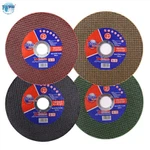

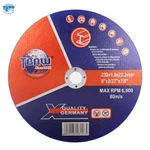

Diamond Cut Off Wheels
Why Choose Us?
Rich Experience
Zhejiang Wanna Industry&Trade Co.,Ltd (TBAW) was established in 1995, As one of the leading abrasive manufacturers in China, we have accumulated a strong and good market trust as well as great customer satisfication over the past two decades.
Quality Control
QC department inspects product strictly at each stage of the production. the specifications of our products, such as sharpness, durability, impact strength and static balance have reached internationally advanced level.
Advanced Equipment
We have 4 tunnel kilns which controlled by computer. Automatic tunnel kiln will make the quality more the quality more stable and color more consistent. Seiko workshop,constant temperature all year round. For the stability of the raw material of the product,adhesive force has an important guarantee,to ensure the product quality more stable.
High Quality Service
Our sales team will be in charge of customer service. If there're any questions about products, you will not only get a quick response from us but also track the process of planning, production, QC, shipment in different stages.
These are metal wheels with diamond-coated edges. They don't shed away like abrasive wheels, they operate similarly to any other diamond cutting blades you would use in a saw. You can cut with it until it dulls, and with a diamond coated edge, it will take a long time to dull.

Super Thin Cut Off Disc is a revolutionary cutting tool that has been specifically designed to deliver outstanding performance and precision.

Our Flat Cutting Discs are designed to offer smooth, precise and controlled cutting performance, making them ideal for use across a wide range of cutting applications. Whether you work in metal fabrication, construction, or automotive repair, our cutting discs are the perfect tool to help you work with greater precision and speed.

One of the key features of Iron Cut Off Wheel is its exceptional cutting speed. This product is designed to cut through metals quickly and efficiently, saving you time and effort. Its consistent performance ensures that you will get the same quality results every time, no matter how frequently you use it.
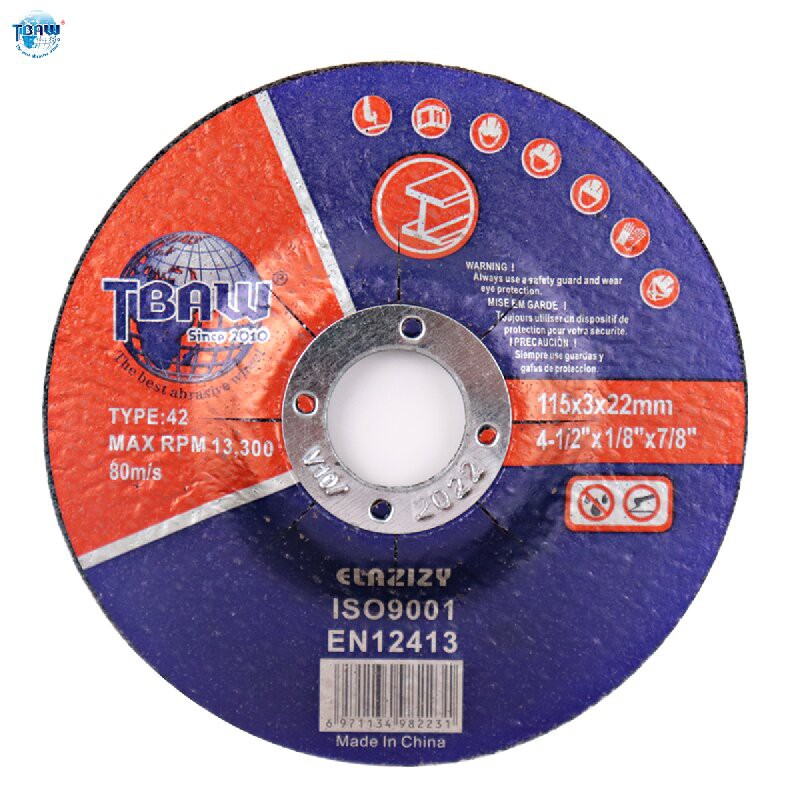
As a manufacturer located in China, we are proud to introduce our latest product – the 3m Grinding Disc. This grinding disc is designed to provide a precise and efficient metal grinding solution, unlike any other in the market.


The 14 Inch Cut Off Wheel is forged from high-quality materials and is incredibly durable. It's easy to handle and maneuver, delivering a smooth and consistent cut every time.


Cut-off wheels feature a diamond abrasive edge, combined with a shatter-resistant steel core. Together, these ensure safe operation, reduced dust and debris and a much longer working life than typical wheels - up to 100x more cuts. For use on most materials including steel, stainless steel, cast iron, rebar, masonry, ceramic tile, composites, and more.
● Diamond abrasive lasts up to 100x longer than conventional bonded abrasive wheels.
● Cut almost any material - steel, stainless steel, cast iron, rebar, stone, concrete block, brick, ceramic tile, composites and more.
● Safer shatter-resistant core won't blow apart like conventional bonded abrasive wheels.
● Wheel retains its original diameter for a consistent cut - won't shrink in diameter like conventional bonded abrasive wheels.
● Lowest cost per cut – spend less time replacing wheels and more time working.
● Reduced dust and debris during use.
Technical Details of Diamond Cut off Wheels
Disc Material: White alumina or white corundum (WA), aluminum zirconium oxide (Z), aluminum oxide (A) or silicon carbide (C).
Grain Size: Coarse (20-40), normal (50-60), fine (60-120).
Disc Hardness. That is, the bond strength between the binder and the abrasive grain can be soft grade (A-K), medium grade (L-T), hard grade (U-Z). The "harder" it is, the longer its useful life, and the "softer" it is, the faster the cutting speed. The degree of the mixture will be adapted to the application that is going to be given.
Type Of Binder: Synthetic Resin-Bakelite (B), synthetic resin-reinforced Bakelite (BF), shellac or epoxy (E), oxychloride (O), rubber, (R), reinforced rubber (RF), silicate (S) or ceramic vitrified (V).
Disc Geometry: T41 flat (on extra-fine cut-off wheels), T42 sunken center (on iron cutting wheels), or T27 sunken center (on roughing discs).
3 Tips to Using Diamond Cut off Wheels


Although they are composed of the same basic structure, a base bonded to a suspension of abrasive, cutoff wheels, and grinding wheels serve very different purposes. Instead of slowly removing material from the surface of a workpiece like a grinding wheel would, cutoff wheels are designed to slice through the material. Typically ranging from 0.015" to 1/16" in width, they are much thinner than most wheels.
Diamond cutting wheels are available in a multitude of bond options but specifically contain diamond abrasive. These wheels are utilized in a variety of industries including wood and metal tooling production, iridium and platinum cutting for manufacturing spark plugs, slicing silicon wafers for computer chips, glass, ceramic, and magnet cutting for automotive and aerospace tools/parts.
Tip 1: Start soft! A smooth cut is the best way to avoid deflection during the cutting process. To guarantee this, begin by trying a resin-bonded diamond cut off wheel. Resin bonds are known as more free-cutting bonds, meaning they have higher abrasive renewal rates and reveal new cutting edges at a higher rate. If necessary, a harder bond like metal can be utilized if the wear rate is too excessive.
Whether you're cutting glass optics or carbide rods, a diamond cut off wheel could be a great choice for your operation.
Tip 2: Ensure your cut rate is optimal for the material being processed. Attempting to cut brittle materials like glass and ceramics too quickly can chip the material, usually during the exit of the cutoff wheel from the cutting area.
Whether you're using a grinding wheel or a cutoff wheel, it is important to ensure the process is well executed.
Tip 3: A well-maintained coolant system. Excessive heat generation can cause a host of problems during a cutting operation, but also prematurely wears the wheel surface. To produce the best cut and extend the life of your wheel, ensure you have a well-maintained coolant system. If you're cutting dry, don't panic! Just make sure your cutoff wheel is designed to be used dry.
Benefits of Using a Diamond Cut off Wheel
Diamond cut off wheels are incredibly hard and wear-resistant, making them ideal for grinding other hard materials such as carbide. This feature also allows diamond cut off wheels to withstand high material removal rates and provide better longevity when compared to conventional abrasive wheels.
From rough grinding at high feed rates to cutting brittle materials with high accuracy, the composition of a diamond grinding wheel can be manipulated to serve a multitude of applications.
This diversity stems from the combination of grit size and the concentration (or volume) of diamond grit present in the wheel's bond. If finer grit is used, a higher quantity of grit particles can be included in the wheel bond. If larger grit is used, not as many grit particles will be able to fit into the wheel bond. Fine grit is useful for high precision and works well with brittle materials, while coarse grit is ideal for faster material removal.
The bond structure of a diamond cut off wheel does impact its heat-resistant abilities. Resin bonds, for example, generate the least heat overall during grinding and are typically used for softer materials like ceramics and composites. Known as a more "flexible" bond, resin bonds have a faster-paced grit renewal rate than metal or vitrified bonds. This allows for a consistent, sharp cutting surface.
Slightly less heat efficient, metal bonds are typically used for grinding tougher materials and are much harder than resin bonds. By retaining grit particles for longer, this bond allows the form of the wheel to hold its shape for extended periods.
Vitrified bonds are made of ceramic material, ideal for heat dissipation. They are typically suggested for grinding materials with low thermal conductivity. Regardless of the bond structure, using a diamond grinding wheel reduces the risk of heat damage to both the wheel and the workpiece. Synthetic diamond abrasive is highly conductive and chemically inert. This makes it a great material for heat dissipation.
The unmatched strength and hardness of synthetic diamonds help maintain a sharper cutting edge, resulting in grinding wheels that resist wear and require less dressing throughout a job.
Diamond cut off wheels can operate for long periods with little to no load-up or glazing. This quality results in more efficient grinding, which means more time cutting and less time dressing a wheel. Efficient grinding greatly reduces the risk of damage to the wheel and workpiece, such as burning, chipping, or breaking.
Diamond abrasive is available in various sizes and shapes and can be suspended in many different types of bonds.
This makes diamond cut off wheels an excellent choice for a variety of applications, including machining hard and brittle materials, grinding hardened metals, stone cutting and polishing, tool sharpening, medical supply production, and electronics and optics manufacturing.
When to Replace Your Diamond Cut off Wheel
Unusual vibrations when cutting
One clear sign that your diamond cut off wheel may be worn-out or damaged is the presence of unusual vibrations during operation. While some vibration level is expected, excessive or irregular vibrations can indicate a compromised disc.
A damaged disc can significantly reduce your control and accuracy while cutting. The vibrations can make it challenging to maintain a steady hand, leading to imprecise cuts or even accidents.
Pay close attention to your angle grinder during operation to detect unusual vibrations. Stop using the tool immediately if you notice excessive shaking or wobbling motions. Inspect the disc for signs of wear, such as cracks, chips, or uneven surfaces.
Reduced cutting speed
Whilst still functional, a damaged or worn disc operates slower than its newer, intact counterparts. If your diamond cut off wheel doesn't work as quickly as it once did, it may need replacing.
Whether you use your angle grinder professionally or at home, the slower speeds reduce productivity and efficiency, meaning you must work harder and longer to obtain the desired results.
A sharp diamond cut off wheel should meet little resistance when it cuts through a material, so the blade may be dull and need replacing if this is not the case.
Unfamiliar sounds when operating
When using diamond cut off wheel, paying attention to its sounds is crucial. Strange or unfamiliar noises during operation can indicate a problem with the disc.
One common cause of unusual sounds is loose or damaged components. If you hear rattling or grinding noises, it may suggest that the disc is not securely fastened or that the flanges holding it in place are damaged.
Ignoring these sounds can have profound implications. Loose components may lead to sudden disc detachment, posing a significant safety risk. Damaged or diamond cut off wheels compromise performance, resulting in a lower-quality finish or uneven cuts.
Visual damage or signs of wear and tear
Even if your angle grinder doesn't make strange noises or vibrations, you may see visible damage indicators on the disc.
Look at the diamond cut off wheel and see if anything is out of place. Are there any cracks or chips? Are there any other abnormalities about the disc you can find?
These signs of wear and tear or damage can lead to less control over the tool and, therefore, an increased risk of injury or accident.
If the edge of the disk feels smooth, the blade has worn down, and the diamond cut off wheel needs replacing. However, if you intend to identify the disc's quality in this way, be aware that the edge is naturally sharp and can pose a risk of injury if it doesn't need replacing.
Expiry date of diamond cut off wheels
Like many other tools and materials, diamond cut off wheels have a limited lifespan. Various factors, including shelf life and the deterioration of bonding agents, determine the expiry dates assigned to cut-off wheels.
The expiry date indicates when the performance of the diamond cut off wheel may be compromised, posing potential risks. To find the expiry date, check the labelling on the wheel packaging. The date is often printed or stamped on the diamond cut off wheel or its container.
If you cannot find an expiry date or it has worn off, you should replace the diamond cut off wheel.
General Diamond Cut off Wheel Safety Recommendations
There are several best practices and recommendations for safe use that apply to diamond cut off wheels of all sizes and types.
● Use The Proper Guard: Having the correct guard on the tool is an important part of safe cutting wheel use. Right-angle grinders - the tool most commonly used with cutting wheels - typically only come with a Type 27 guard. Cutting wheels, however, are often Type 1 style wheels that require a Type 1 guard, which has half-moon, 180-degree coverage to provide added protection for the operator. Using a Type 27 guard with a Type 1 cutting wheel does not provide that additional protection. Always have the proper guard in place when using a cutting wheel.
● Wear the Necessary PPE: Personal protective equipment that should be worn when using a cutting wheel include safety glasses, a face shield, ear protection, gloves, flame resistant clothing, leather apron and safety shoes. Hard hats and/or welding caps can also provide head protection from the sparks that occur during metal cutting.
● Conduct A Visual Inspection: Before using a cutting wheel, conduct a visual inspection of the wheel and tool. Replace with a new wheel if there are cracks or other signs of wear or damage. Even if the wheel is still on the tool, the tool could have been dropped or knocked off the tool rack, so it's important to always check for damage before use. Also, jog the tool for a few seconds before using it to make sure it's running true.
● Mount The Wheel Correctly: Most cutting wheels have a stamped metal ring around the wheel hub. The wheel should be mounted with that stamped insert facing the spindle on the motor side of the tool. This will provide a flush mount because there is less chance for grit or abrasive debris to be present on that side of the wheel.
● Secure The Workpiece: Be sure the workpiece is held tightly in a vice or clamped so there's no chance it will move, bend or roll once the cut is started. If the workpiece does move during the cut, it could twist and pinch the wheel, potentially causing the wheel to break apart.
● Don't Flex A Cutting Wheel: During a cut, never try to flex or bend the wheel to make a curved cut. This introduces side loading and can fracture the wheel.
● Never Grind With A Cutting Wheel: A cutting wheel doesn't have the fiberglass reinforcement that a grinding wheel does, so it can be dangerous to grind with a cutting wheel. Only use a cutting wheel for cutting. Combination wheels can be used for both cutting and grinding and are marked accordingly.
● Don't Push A Wheel Through A Cut: Cutting wheels should only have the weight of the tool as they go through a cut. Forcing the wheel with unnecessary pressure can cause the wheel to slip and bind. Too much pressure also decreases product life.
● Use A Better Abrasive For Harder Materials: Some specialty metals can be difficult to cut. In these cases, choose a cutting wheel with a higher-performing abrasive grain like a ceramic. This helps you cut efficiently and reduces the possibility of the wheel glazing due to excessive heat.
● Watch The Spark Path: Sparks are created with any type of cutting wheel. The spark path can be altered depending on the approach used for the cut. Be mindful of the spark path and any items that could be damaged or coworkers who are in the area.
Our Factory
Zhejiang Wanna Industry&Trade Co.,Ltd (TBAW) was established in 1995, As one of the leading abrasive manufacturers in China, we have accumulated a strong and good market trust as well as great customer satisfication over the past two decades.
Zhejiang Wanna Abrasive company mainly produces resin bond Cutting Wheels, Grinding Wheels, Flap Disc and Velcro Disc which are applied to cut-off,grinding and polishing.
Seiko workshop,constant temperature all year round. For the stability of the raw material of the product,adhesive force has an important guarantee,to ensure the product quality more stable.
We have 4 tunnel kilns which controlled by computer. Automatic tunnel kiln will make the quality more the quality more stable and color more consistent.


FAQ
Hot Tags: diamond cut off wheels, China diamond cut off wheels manufacturers, suppliers, factory, handheld metal cutting disc, small cutting disc, extra thick metal cutting disc, metal cutting disc for sculpture, metal cutting disc for rhenium, metal cutting disc for gadolinium
Previous
Abrasive Grinding WheelYou Might Also Like


Send Inquiry