


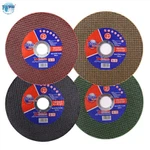

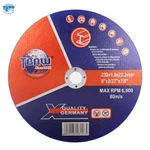

Abrasive Grinding Wheel
Why Choose Us?
Rich Experience
Zhejiang Wanna Industry&Trade Co.,Ltd (TBAW) was established in 1995, As one of the leading abrasive manufacturers in China, we have accumulated a strong and good market trust as well as great customer satisfication over the past two decades.
Quality Control
QC department inspects product strictly at each stage of the production. the specifications of our products, such as sharpness, durability, impact strength and static balance have reached internationally advanced level.
Advanced Equipment
We have 4 tunnel kilns which controlled by computer. Automatic tunnel kiln will make the quality more the quality more stable and color more consistent. Seiko workshop,constant temperature all year round. For the stability of the raw material of the product,adhesive force has an important guarantee,to ensure the product quality more stable.
High Quality Service
Our sales team will be in charge of customer service. If there're any questions about products, you will not only get a quick response from us but also track the process of planning, production, QC, shipment in different stages.
Abrasive grinding wheels are used to modify or prepare surfaces (either internal or external). They use abrasive cut-off, face grinding or periphery grinding. They can also be used for cutting, polishing, sanding, deburring and finishing.

Our 4 1/2 Cut Off Wheel is made with high-quality materials that have been optimized for cutting precision, durability, and safety. The cutting wheel is designed to fit a wide range of handheld angle grinders, making it a versatile choice for many applications.

Our Flat Cutting Discs are designed to offer smooth, precise and controlled cutting performance, making them ideal for use across a wide range of cutting applications. Whether you work in metal fabrication, construction, or automotive repair, our cutting discs are the perfect tool to help you work with greater precision and speed.

One of the key features of Iron Cut Off Wheel is its exceptional cutting speed. This product is designed to cut through metals quickly and efficiently, saving you time and effort. Its consistent performance ensures that you will get the same quality results every time, no matter how frequently you use it.
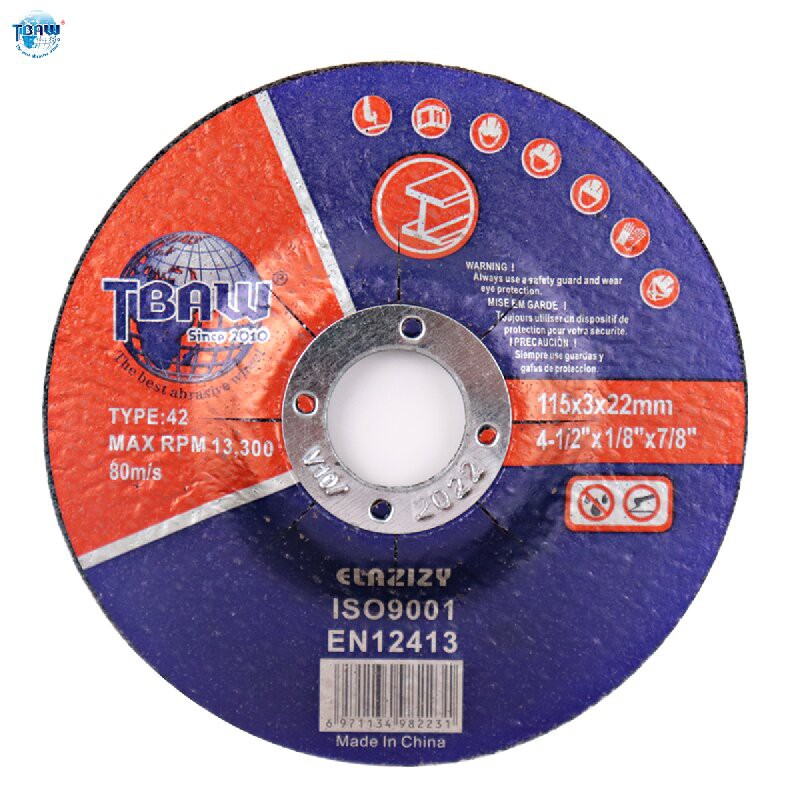
As a manufacturer located in China, we are proud to introduce our latest product – the 3m Grinding Disc. This grinding disc is designed to provide a precise and efficient metal grinding solution, unlike any other in the market.


We are excited to introduce our latest product, the Diamond Cut Off Wheels, designed to meet the needs of businesses looking for efficiency and precision in their cutting processes.

Are you looking for the ultimate tool to help you cut through a variety of materials like a hot knife through butter? Look no further than the 14 Inch Cut Off Wheel!

As a manufacturer, we take pride in our product, the Abrasive Cutting Wheel. Our manufacturing process adheres to strict quality standards to ensure that our customers receive the best product possible.

Welcome to our innovative manufacturing center in China, where we craft state-of-the-art metal cut-off discs for drills. Our products are designed to meet the needs of metal fabrication professionals and DIY enthusiasts all around the world.
The main aspects of an abrasive grinding wheel are:
Grit Size: This means the particle size of abrasive grains. The range is expressed by number, for example very coarse 4 to very fine 1200.
Coating Material Bonding: This means the bonding material used in the wheel construction.
Abrasive Type: This means the type of abrasive used in wheel construction.
Grade Of The Wheel: This represents the tenacity with which the bonding material holds the abrasive grain in a wheel. Wheels are graded as soft or hard according to their degree of tenacity. The grade scale is expressed in letters from A which is extremely soft to Z which is extremely hard.
Wheel Structure: This means the level of porosity in the wheel. The higher the number, the greater the level of porosity.
Types of Abrasive Grinding Wheels
In general, the most commonly used types of abrasive grinding wheels are:
Type 1 Straight Grinding Wheels: Straight wheels are a common type of revolution found on pedestal or bench grinders. It is often also widely used for centreless and cylindrical surface grinding operations.
Type 2 Cylinder Or Wheel Ring: This type of wheel doesn't have middle mounting support, but it sits on an extended and wide surface. They're mainly utilised in horizontal or vertical spindle grinders for producing flat surfaces.
Type 4 Tapered Grinding Wheels: A sharp emery wheel may be a straight wheel that tapers externally towards the wheel's midpoint. A straight wheel with a sharp wheel is usually used for gear teeth, grinding threads, etc. In tapered cup wheels the sides taper outwards, providing extra strength and therefore accepting higher lateral loads. Both types are primarily used in tool and cutter grinding.
Type 6 Straight Cup: This straight cup wheel is employed as an option for cup wheels in cutters and gear grinders. It has an additional radial grinding surface, which can be beneficial in some applications.
Type 9 Segmented Wheels: Grinding wheel segments are generally used to grind flat stock or flat surfaces within a workpiece for anything from heavy stock removal to precision grinding.
Type 12 Dish Cup: This type of wheel is suitable for jug grinding and cutter grinding. It only cuts in crevices and slots because it features a skinny cup-style grinding.
Type 13 Saucer Grinding Wheels: Saucer grinding wheels are used for grinding twist drills and milling cutters. It is often particularly in demand in non-machining areas because the saw filers are employed by saucer wheels to take care of saw blades.
What Material Is the Most Commonly Used Abrasive in Grinding Wheels
Two types of abrasives are used in grinding wheels: natural and manufactured. Except for diamonds, manufactured abrasives have almost entirely replaced natural abrasive materials. Even natural diamonds have been replaced in some instances by synthetic diamonds.
The manufactured abrasives most commonly used in grinding wheels are aluminum oxide, silicon carbide, cubic boron nitride, and diamond.


● Aluminum Oxide. Refining bauxite ore in an electric furnace makes aluminum oxide. The bauxite ore is heated to eliminate moisture, then mixed with coke and iron to form a furnace charge. The mixture is then fused and cooled. The fused mixture resembles a rocklike mass. It is washed, crushed and screened to separate the various grain sizes.
Aluminum oxide wheels are manufactured with abrasives of different degrees of purity to give them certain characteristics for different grinding operations and applications. The color and toughness of the wheel are influenced by the degree of purity.
General-purpose aluminum oxide wheels, usually gray and 95 percent pure are the most popular abrasives used. They are used for grinding most steels and other ferrous alloys. They are used for grinding most steels and other ferrous alloys. White aluminum oxide wheels are nearly pure and are very friable (able to break away from the material easily.) They are used for grinding high-strength, heat-sensitive steels.
● Silicon Carbide. Silicon carbide grinding wheels are made by mixing pure white quartz, petroleum coke and small amounts of sawdust and salt, and then by firing the mixture in an electric furnace. The process is called synthesizing the coke and sand. As in the making of aluminum oxide abrasive, the resulting crystalline mass is crushed and graded by particle size.
Silicon carbide wheels are harder and more brittle than aluminum oxide wheels. There are two principal types of silicon carbide wheels: black and green. Black wheels are used for grinding cast irons, non-ferrous metals like copper, brass, aluminum, and magnesium, and nonmetallics such as ceramics and gemstones. Green silicon carbide wheels are more friable than the black wheels and used for tool and cutter grinding of cemented carbide.
● Diamond. Two types of diamond are used in the production of grinding wheels: natural and manufactured. Natural diamond is a crystalline form of carbon, and very expensive. In the form of bonded wheels, natural diamonds are used for grinding very hard materials such as cemented carbides, marble, granite and stone.
Recent developments in the production of manufactured diamonds have brought their cost down and led to expanded use. Manufactured diamonds are now used for grinding tough and very hard steels, cemented carbide and aluminum oxide cutting tools.
Selecting the Right Size Abrasive Grinding Wheel
When selecting an abrasive grinding wheel, users should consider two primary factors - diameter and thickness. Both metrics affect the wheel's usability and performance.
Diameter
The choice of diameter for an abrasive grinding wheel generally depends on the available tool. The primary reason for fitting the abrasive grinding wheel diameter to the tool is safety - the operation of the tool should never exceed the rpm rating on the abrasive. Smaller power tools tend to operate at higher rpm than larger power tools, and the design of abrasives and brushes enables them to meet the same standards.
Choosing the correct diameter also enhances safety because it allows for the use of proper guards. Trying to fit a 6-inch abrasive on a 4.5-inch grinder necessitates removing the protective guards, and running the grinder without guards would increase the operator's chance of injury if the abrasive failed.
Product life is an additional factor in the choice of abrasive grinding wheel diameter. Larger-diameter wheels last longer. Especially in applications where the operator must run the abrasive grinding wheel for a sustained period, using a larger-diameter wheel can improve productivity by reducing the number of times the operator must stop and replace the abrasive.
The configuration of the workspace and workpiece also influence the choice of diameter.
Thickness
The thickness of an abrasive grinding wheel impacts its performance and wheel life. Abrasive grinding wheels typically come with a quarter-inch thickness. This measurement gives our wheels a superior balance of precision, wheel life, and cut-rate when grinding.
Combination grinding and cutting wheels with 1/8-inch thickness are also available. These wheels allow for grinding and for making cuts that require a thinner wheel. The benefit of these thinner combo wheels is that they enable the operator to perform both 90-degree cuts and shallow-angled grinding without having to change the abrasive used on the wheel.
What Is the Grit Size in an Abrasive Grinding Wheel
Grit size refers to the actual size of the individual grains used on the wheel. The lower the grit number, the coarser the grit and the higher the number, the finer the grit. Coarser grits are best used for rapid removal of material where the surface finish is less important.
Abrasive grinding wheels have two criteria: The abrasive grains and the bond that holds those grains together. The grain a wheel employs is specifically geared towards a certain type of material. Some abrasives are better for certain materials than others. When properly matched to its material, the abrasive possesses the ability to stay sharp for a longer duration. Since there are so many different types of material to be matched, define the purpose of the wheel first, as each abrasive type is unique, with distinct properties in regards to hardness, strength, fracture toughness and resistance to impact.
Grit size is another factor to consider. Grit size refers to the actual size of the individual grains used on the wheel. The lower the grit number, the coarser the grit and the higher the number, the finer the grit. Coarser grits are best used for rapid removal of material where the surface finish is less important. Finer grits are used in cases when the surface finish must be exceedingly smooth.
Abrasive Grinding Wheels Marking System
An abrasive grinding wheel will be marked with the following information:
The trademark is the name of the wheel's manufacturer, and is located at the very top of the wheel.
A test record is used to indicate that the wheel has been tested and meets the required safety standards.
If the wheel is an organic-bonded wheel used for hand-held applications, it will have an expiry date of three years from the date of manufacture. This date will be marked on the wheel.
Every abrasive grinding wheel over 80mm in diameter must be marked with its maximum operating speed, which we will look at later. For high speed wheels, this is done using a speed stripe, which is a coloured stripe located in the centre of the wheel. The colour of the stripe represents the following speeds:
1. Blue - 50m/s
2. Yellow - 60m/s
3. Red - 80m/s
4. Green - 100m/s
5. Blue/yellow - 125m/s
The dimensions of the wheel in millimetres must be printed on the wheel. There will be three numbers, which indicate the wheel's diameter, thickness and hole size.
What Is the RPM of Abrasive Grinding Wheel
The abrasive grinding wheel will usually determine the correct rpm. For cylindrical tool post grinding, there are basically three speed ranges within which abrasive grinding wheels perform best – 5,500 to 6,500 sfm, 8,500 sfm and 12,000 sfm. Because of the maximum safe wheel speed of most vitrified abrasive grinding wheels and maximum spindle speeds, most tool post grinding is done around 6,500 sfm.
The maximum safe operating speed for an abrasive grinding wheel should be clearly marked on the abrasive grinding wheel. Always check to make sure the spindle speed of the grinder does not exceed the maximum safe speed of the abrasive grinding wheel.
Use the following formula to determine the abrasive grinding wheel speed (rpm):
- RPM = 3.82 x sfm/ Wheel Diameter (inch)
- Just as the workpiece speed can be manipulated to compensate for variations in wheel grade, so can the abrasive grinding wheel speed. If the wheel appears too "hard", the wheel speed can be decreased thereby slowing it to the work speed ratio. This increases the cutting force per grain, causing the wheel to act "softer".
- Increasing the abrasive grinding wheel speed will cause a too "soft" wheel to act "harder" by raising the work speed to wheel speed ratio and resulting in less cutting force per grain. Never increase the abrasive grinding wheel speed above its rated maximum safe speed.
Our Factory
Zhejiang Wanna Industry&Trade Co.,Ltd (TBAW) was established in 1995, As one of the leading abrasive manufacturers in China, we have accumulated a strong and good market trust as well as great customer satisfication over the past two decades.
Zhejiang Wanna Abrasive company mainly produces resin bond Cutting Wheels, Grinding Wheels, Flap Disc and Velcro Disc which are applied to cut-off,grinding and polishing.
Seiko workshop,constant temperature all year round. For the stability of the raw material of the product,adhesive force has an important guarantee,to ensure the product quality more stable.
We have 4 tunnel kilns which controlled by computer. Automatic tunnel kiln will make the quality more the quality more stable and color more consistent.


FAQ
Hot Tags: abrasive grinding wheel, China abrasive grinding wheel manufacturers, suppliers, factory, Grinding Disc for Metal, Cut Off Wheel for Angle Grinder, Abrasive Flap Wheel, Stone Cutting Disc, 4 1 2 Grinding Discs, Round Velcro Disc
Previous
Iron Cut Off WheelYou Might Also Like


Send Inquiry