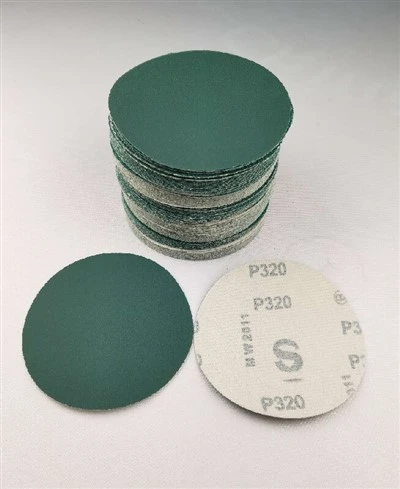
Hey there! As a supplier of 4 1/2 Grinding Discs, I often get asked about the surface finish that these little wonders can achieve. So, I thought I'd sit down and write this blog to shed some light on the topic.
First off, let's talk a bit about what 4 1/2 Grinding Discs are. These are circular abrasive tools that are commonly used with power tools like angle grinders. They come in various grits, materials, and bond types, each designed for specific applications. The "4 1/2" refers to the diameter of the disc in inches, which is a popular size because it offers a good balance between maneuverability and grinding power.
Now, onto the main question: what kind of surface finish can you expect with 4 1/2 Grinding Discs? Well, it all depends on a few factors.
Grit Size
The grit size of a grinding disc is one of the most important factors that determines the surface finish. Grit size refers to the number of abrasive particles per square inch of the disc's surface. A lower grit number means larger abrasive particles, which are more aggressive and are used for rough grinding and material removal. For example, a 24 - grit disc is great for quickly removing large amounts of metal, but it will leave a very rough surface finish.
On the other hand, a higher grit number indicates smaller abrasive particles. These are used for finer grinding and finishing operations. A 120 - grit or 220 - grit disc can produce a much smoother surface finish, almost like a polished look. If you're working on a project where you need a smooth and clean surface, like preparing a metal surface for painting or coating, you'll want to use a higher - grit 4 1/2 Grinding Disc. You can check out our 4 Inch Grinding Wheel range, which includes different grit options to suit your needs.
Material of the Grinding Disc
The material of the grinding disc also plays a crucial role in the surface finish. Common materials used for 4 1/2 Grinding Discs include aluminum oxide, silicon carbide, and diamond.
Aluminum oxide is a very versatile and widely used abrasive material. It's suitable for grinding ferrous metals like steel and iron. Aluminum oxide discs can provide a good balance between material removal and surface finish. They can be used for both rough grinding and finishing, depending on the grit size.
Silicon carbide is harder and more brittle than aluminum oxide. It's ideal for grinding non - ferrous metals, ceramics, and glass. Silicon carbide discs can produce a smoother surface finish on these materials compared to aluminum oxide.
Diamond is the hardest abrasive material available. Diamond - coated 4 1/2 Grinding Discs are used for grinding very hard materials like concrete, stone, and gemstones. They can achieve an extremely smooth and precise surface finish, which is essential for applications like jewelry making or high - end construction projects.
Bond Type
The bond type of a grinding disc refers to the material that holds the abrasive particles together. There are different bond types, such as resin bond, vitrified bond, and metal bond.
Resin - bonded grinding discs are flexible and are commonly used for general - purpose grinding. They can provide a good surface finish on a variety of materials. Vitrified - bonded discs are more rigid and are often used for precision grinding. They can maintain their shape better during the grinding process, resulting in a more consistent surface finish. Metal - bonded discs are very strong and are used for grinding hard materials. They can offer a high level of durability and can achieve a good surface finish on tough materials.
Applications and Surface Finish
Let's look at some specific applications and the surface finish you can expect with 4 1/2 Grinding Discs.
Metal Fabrication
In metal fabrication, 4 1/2 Grinding Discs are used for a variety of tasks. For cutting and beveling metal, a lower - grit disc (around 24 - 60 grit) is typically used. This will quickly remove the metal, but the surface will be rough. After the initial cutting and shaping, a higher - grit disc (120 - 220 grit) can be used to smooth out the edges and surfaces. This will prepare the metal for welding, painting, or other finishing processes. If you're using power tools for metal fabrication, our Grinding Wheel for Power Tools can be a great choice.
Concrete and Stone Work
When working with concrete and stone, 4 1/2 Grinding Discs are used for grinding, polishing, and shaping. For rough grinding and removing excess material, a lower - grit diamond disc is used. This will quickly flatten the surface but leave it rough. For a smoother finish, a higher - grit diamond disc can be used. With the right sequence of grits, you can achieve a polished surface on concrete and stone, which is perfect for flooring, countertops, or decorative elements.
Woodworking
Although 4 1/2 Grinding Discs are not as commonly used in woodworking as in metal or stone work, they can still be used for some tasks. For example, if you need to remove a large amount of wood quickly, a lower - grit aluminum oxide disc can be used. However, for a smooth finish on wood, sandpaper is usually a better option. But in some cases, a very fine - grit 4 1/2 Grinding Disc can be used for final touch - ups.


Tips for Achieving the Best Surface Finish
- Choose the right disc: Select the appropriate grit size, material, and bond type based on the material you're working on and the desired surface finish.
- Use the right pressure: Applying too much pressure can cause the disc to wear out quickly and can result in a rough surface finish. Use a light to moderate pressure and let the disc do the work.
- Keep the disc cool: Grinding generates heat, which can damage the disc and affect the surface finish. Make sure to use coolant or lubricant if necessary, especially when grinding hard materials.
- Change the disc regularly: As the disc wears out, its performance and the surface finish it can achieve will deteriorate. Replace the disc when it starts to lose its effectiveness.
In conclusion, 4 1/2 Grinding Discs can achieve a wide range of surface finishes, from rough to smooth and polished. By understanding the factors that affect the surface finish, such as grit size, material, and bond type, and by following the right techniques, you can get the best results for your projects.
If you're interested in our 4 1/2 Grinding Discs, or if you have any questions about surface finish or which disc is right for your application, don't hesitate to reach out. We're here to help you make the best choice for your grinding needs. Let's start a conversation and see how we can work together to get the job done right!
References
- "Grinding Technology: Theory and Applications of Machining with Abrasives" by Stephen Malkin
- "Handbook of Abrasive Technology" by Ramesh Singh