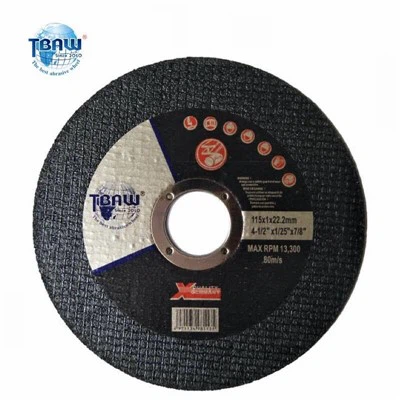
As a seasoned supplier of Resin Grinding Wheels, I understand the paramount importance of ensuring the quality of these products before making a purchase. In the following blog, I will share my insights and experiences on how to assess the quality of a Resin Grinding Wheel before you bring it into your workshop or production line.
1. Understanding the Basics of Resin Grinding Wheels
Resin grinding wheels are widely used in various industries, from metal fabrication to concrete finishing. They are composed of abrasive grains bonded together by a resin matrix. The quality of these components directly affects the performance and durability of the grinding wheel.
The abrasive grains are the cutting elements of the wheel. Common types of abrasives include aluminum oxide, silicon carbide, and diamond. Each type has its own characteristics and is suitable for different applications. For example, aluminum oxide is a popular choice for grinding ferrous metals, while silicon carbide is better for non - ferrous metals and ceramics. Turbo Diamond Concrete Grinding Disc uses diamond abrasives, which offer high hardness and excellent grinding performance on concrete surfaces.


The resin matrix holds the abrasive grains in place and provides the necessary strength and flexibility to the wheel. A high - quality resin matrix should be able to withstand the high temperatures and forces generated during grinding without breaking down or releasing the abrasive grains prematurely.
2. Checking the Manufacturer's Reputation
One of the easiest ways to ensure the quality of a resin grinding wheel is to research the manufacturer's reputation. A well - established and reputable manufacturer is more likely to produce high - quality products. Look for manufacturers that have been in the industry for a long time and have a proven track record of delivering reliable and durable grinding wheels.
You can check online reviews and testimonials from other customers. Forums and professional communities related to grinding and machining are great places to find honest feedback. Additionally, look for manufacturers that comply with industry standards and certifications. For example, ISO (International Organization for Standardization) certifications indicate that the manufacturer follows strict quality management systems.
3. Examining the Physical Attributes
Visual Inspection
When you receive a sample or are inspecting the grinding wheel in person, a visual inspection is a good starting point. Check for any visible defects such as cracks, chips, or uneven surfaces. Cracks can compromise the structural integrity of the wheel and may lead to dangerous situations during use. Uneven surfaces can cause uneven wear and affect the grinding performance.
Dimensional Accuracy
The dimensions of the grinding wheel are crucial for its proper functioning. Measure the diameter, thickness, and bore size of the wheel to ensure they match the specifications provided by the manufacturer. Incorrect dimensions can lead to problems with mounting the wheel on the grinder and may also affect the balance of the rotating assembly.
Balance
A balanced grinding wheel is essential for smooth and efficient grinding. An unbalanced wheel can cause vibrations, which not only reduce the quality of the grinding but also put extra stress on the grinder and its components. You can test the balance of the wheel using a balancing stand. If the wheel is out of balance, it should be discarded or re - balanced by a professional.
4. Evaluating Abrasive Grain Quality
Grit Size
The grit size of the abrasive grains determines the coarseness or fineness of the grinding action. Smaller grit sizes (e.g., 80 - 120) are used for finishing operations, while larger grit sizes (e.g., 24 - 36) are suitable for rough grinding. Make sure the grit size of the wheel matches your specific grinding requirements.
Grain Type and Quality
As mentioned earlier, different types of abrasive grains have different properties. When assessing the quality of the grains, look for consistent shape and size. High - quality grains should be hard, sharp, and able to retain their cutting edges for a long time. For metal grinding, Zirconia Alumina Grinding Disc uses zirconia alumina abrasives, which offer high heat resistance and long - lasting performance.
5. Testing the Bond Strength
The bond strength of the resin matrix is a critical factor in the performance of the grinding wheel. A strong bond is necessary to hold the abrasive grains in place during grinding. There are several ways to test the bond strength:
Touch Testing
Run your finger gently over the surface of the wheel. If you can easily dislodge any abrasive grains, it indicates a weak bond. However, this method is only a rough indication and should be complemented with more rigorous testing.
Grinding Test
Conduct a small - scale grinding test on a sample workpiece. Observe the grinding performance and the condition of the wheel. If the wheel wears too quickly or the abrasive grains are released prematurely, it may be a sign of a weak bond.
6. Considering Application - Specific Requirements
Different applications have different requirements for resin grinding wheels. For example, in concrete grinding, Double Row Diamond Concrete Grinding Disc is designed to provide high - efficiency and long - lasting performance on concrete surfaces. It has a specific diamond concentration and bond hardness to optimize the grinding process.
In deburring applications, Unitized Deburring Wheel is engineered to remove burrs smoothly and precisely. It has a unique structure and abrasive composition to achieve the best results.
Make sure the grinding wheel you choose is suitable for your specific application. Consider factors such as the material being ground, the required surface finish, and the grinding speed.
7. Verifying Compatibility with Equipment
The resin grinding wheel must be compatible with your grinding equipment. Check the maximum operating speed of the wheel and make sure it matches the speed capabilities of your grinder. Using a wheel with a lower maximum speed than the grinder can operate at can be extremely dangerous.
Also, ensure that the bore size of the wheel fits the spindle of your grinder. Most grinders use standard bore sizes, but it's still important to double - check to avoid any compatibility issues.
8. Comparing Prices and Value
While price is an important consideration, it should not be the only factor when purchasing a resin grinding wheel. A higher - priced wheel may offer better quality, longer lifespan, and improved performance, which can translate into cost savings in the long run.
Compare the prices of different brands and models, but also consider the value they offer. Look for wheels that provide a good balance between price and performance. For example, 5 Inch Grinding Wheels come in a variety of qualities and prices. Choose the one that meets your needs without breaking the bank.
Conclusion
Ensuring the quality of a resin grinding wheel before purchase requires a comprehensive approach. By understanding the basics of the product, checking the manufacturer's reputation, examining physical attributes, evaluating abrasive grain quality, testing bond strength, considering application - specific requirements, verifying compatibility with equipment, and comparing prices and value, you can make an informed decision.
If you are in the market for high - quality resin grinding wheels, I am here to assist you. We have a wide range of products that meet the highest quality standards. Contact me to discuss your specific requirements and start a procurement negotiation.
References
- "Grinding Technology: Theory and Applications of Machining with Abrasives" by Stephen Malkin
- "Handbook of Abrasive Technology" by Ramesh Singh