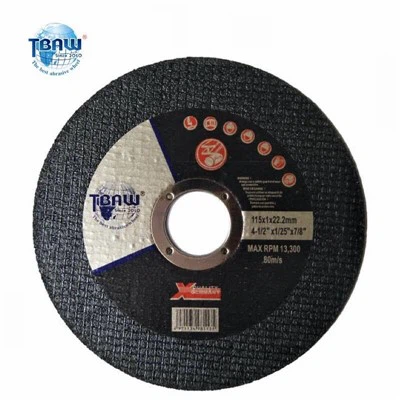
As a seasoned supplier of grinding discs, I've witnessed firsthand the critical role these tools play across various industries. Grinding discs are essential for tasks ranging from heavy - duty metal fabrication to delicate concrete polishing. But what exactly are the quality standards for grinding discs? In this blog, we'll delve into the key factors that define a high - quality grinding disc.
Abrasive Material Quality
The abrasive material is the heart of any grinding disc. Different applications require different types of abrasives. For example, aluminum oxide is widely used for grinding ferrous metals like steel. It's tough, self - sharpening, and can handle high - pressure grinding. Silicon carbide, on the other hand, is more suitable for non - ferrous metals, ceramics, and glass. It has a sharper cutting edge and is better at dissipating heat, which is crucial when working on materials that are sensitive to high temperatures.
Diamond abrasives are the go - to for grinding and polishing hard materials such as concrete and stone. Our 7 Inch Diamond Concrete Grinding Cup Wheel is a prime example. The quality of the diamond used in the disc significantly impacts its performance. High - grade diamonds are more durable, have better cutting ability, and can maintain a consistent grind over a longer period. The diamond's size, concentration, and bonding strength all contribute to the disc's overall quality. A well - bonded diamond abrasive ensures that the diamonds stay in place during grinding, preventing premature wear and tear.
Bonding Quality
The bond holds the abrasive grains together and attaches them to the disc's backing. There are different types of bonds, including resin, vitrified, and metal bonds. Resin bonds are popular because they offer a good balance between flexibility and strength. They are suitable for a wide range of applications, from light finishing to heavy stock removal. Our Resin Bond Concrete Polishing Disc uses a high - quality resin bond that provides excellent control and a smooth finish.
Vitrified bonds are more rigid and are often used for precision grinding. They can withstand high grinding pressures and are less likely to deform during operation. Metal bonds, on the other hand, are extremely strong and are commonly used for diamond - based grinding discs, especially those for heavy - duty applications.
The quality of the bond is crucial for the disc's performance. A poor - quality bond can cause the abrasive grains to fall off prematurely, leading to uneven grinding and a shorter lifespan for the disc. A good bond should have the right amount of strength to hold the abrasives in place while also allowing for self - sharpening as the grains wear down.
Disc Thickness and Balance
The thickness of a grinding disc is an important factor in its quality. A thicker disc is generally more durable and can withstand higher grinding pressures. However, it may also be more difficult to control, especially during fine - finishing operations. The thickness should be chosen based on the specific application. For example, a thinner disc may be more suitable for detailed grinding work, while a thicker disc is better for heavy - duty stock removal.
Balance is equally important. An unbalanced grinding disc can cause excessive vibration during operation, which not only affects the quality of the grind but also poses a safety risk. High - quality grinding discs are carefully balanced during the manufacturing process to ensure smooth and stable operation. This balance ensures that the disc wears evenly and reduces the risk of it breaking or causing damage to the workpiece.
Safety Standards
Safety is a top priority when it comes to grinding discs. All grinding discs should comply with relevant safety standards and regulations. These standards govern aspects such as the disc's maximum operating speed, its strength, and the quality of its construction. For example, a grinding disc should be able to withstand the centrifugal forces generated at its rated speed without breaking apart.
Our company ensures that all our grinding discs, including the Angle Grinder Wheel, are thoroughly tested to meet or exceed safety standards. This includes tests for burst strength, radial and lateral run - out, and adhesion between the abrasive and the backing. We also provide clear instructions and warnings on the packaging to ensure that users handle the discs safely.
Precision and Tolerances
Precision is key in the manufacturing of grinding discs. The dimensions of the disc, such as its diameter, thickness, and the size of the center hole, should be within tight tolerances. Any deviation from these specifications can lead to problems such as poor fit on the grinder, inconsistent grinding results, or even safety issues.
For example, in the case of Double Row Diamond Concrete Grinding Disc and Turbo Diamond Concrete Grinding Disc, the arrangement of the diamond segments and their alignment are critical for achieving a uniform grind on concrete surfaces. High - quality manufacturing processes ensure that these discs have precise segment placement and consistent dimensions.
Performance and Longevity
Ultimately, the performance and longevity of a grinding disc are what matter most to users. A high - quality grinding disc should be able to achieve the desired grinding results quickly and efficiently. It should have a long lifespan, reducing the frequency of disc changes and saving both time and money.
The performance of a grinding disc is affected by all the factors mentioned above, from the abrasive material and bond quality to the disc's thickness and balance. For example, a disc with high - quality abrasives and a strong bond will be able to cut through the material more effectively and maintain its cutting edge for longer.


Application - Specific Quality
Different applications have different quality requirements for grinding discs. In metal fabrication, a disc may need to be able to withstand high - heat generated during grinding and have excellent resistance to wear. In concrete polishing, a disc should be able to produce a smooth and consistent finish without leaving scratches.
Our company offers a wide range of grinding discs tailored to different applications. Whether you're working on a large - scale construction project or a small - scale DIY job, we have the right disc for you. We understand the unique needs of each application and ensure that our products meet the highest quality standards for those specific tasks.
In conclusion, the quality standards for grinding discs are multifaceted, encompassing the quality of the abrasive material, the bonding, the disc's physical properties, safety, precision, performance, and application - specific requirements. As a supplier, we are committed to providing our customers with grinding discs that meet the highest quality benchmarks.
If you're in the market for high - quality grinding discs, we invite you to reach out to us. We'd be more than happy to discuss your specific needs and help you find the perfect grinding disc for your project. Whether you're a professional tradesperson or a DIY enthusiast, we have the products and expertise to support your grinding needs. Let's start a conversation and explore how our grinding discs can enhance your work.
References
- "Grinding Technology: Theory and Applications of Machining with Abrasives" by Stephen Malkin
- "Handbook of Abrasive Technology" edited by Peter C. Powell