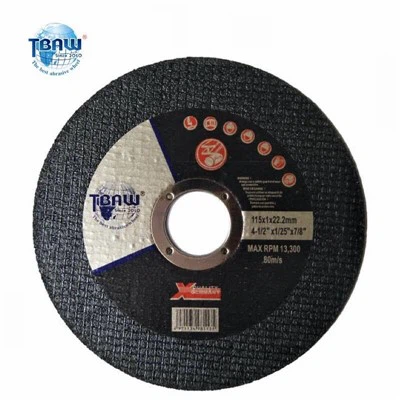
As a seasoned supplier of Stone Abrasive Wheel, I've witnessed firsthand the diverse needs of our clients in various industries. One of the most common questions I encounter is about the difference between resin - bonded and metal - bonded stone abrasive wheels. In this blog, I'll delve into the characteristics, advantages, and applications of each type to help you make an informed decision.
Resin - Bonded Stone Abrasive Wheels
Resin - bonded stone abrasive wheels are widely used in many industries due to their unique properties. The resin bond is a type of organic bond that holds the abrasive grains together. This bond is created by mixing resin with the abrasive material and then pressing and curing the mixture at a specific temperature.
Characteristics
- Flexibility: Resin - bonded wheels are relatively flexible compared to metal - bonded ones. This flexibility allows them to conform to the shape of the workpiece to some extent, which is particularly useful when grinding irregular surfaces.
- Cool Cutting: The resin bond has good heat - dissipating properties. During the grinding process, it helps to reduce the heat generated, preventing the workpiece from overheating and minimizing the risk of thermal damage.
- Self - Sharpening: As the wheel wears during use, the resin bond breaks down, exposing new abrasive grains. This self - sharpening feature ensures consistent cutting performance throughout the life of the wheel.
Advantages
- Versatility: Resin - bonded wheels can be used for a wide range of applications, including grinding, cutting, and polishing. They are suitable for various materials such as stone, concrete, ceramics, and even some metals.
- Smooth Finish: They can produce a smooth and fine finish on the workpiece, making them ideal for applications where surface quality is crucial, such as in the production of decorative stone products.
- Cost - Effective: Generally, resin - bonded wheels are more cost - effective than metal - bonded wheels. They offer a good balance between performance and price, making them a popular choice for many small and medium - sized businesses.
Applications
- Stone Fabrication: In the stone fabrication industry, resin - bonded wheels are used for shaping, grinding, and polishing marble, granite, and other natural stones. For example, when creating countertops or sculptures, these wheels can help achieve the desired smoothness and finish.
- Concrete Grinding: They are also commonly used for grinding and leveling concrete floors. The flexibility of the resin bond allows the wheel to adapt to the uneven surface of the concrete, ensuring a more uniform grind.
- Ceramic Processing: Resin - bonded wheels are suitable for grinding and cutting ceramic materials. They can be used to shape ceramic tiles, vases, and other ceramic products with precision.
Metal - Bonded Stone Abrasive Wheels
Metal - bonded stone abrasive wheels, on the other hand, are known for their durability and strength. The metal bond is typically made of materials such as bronze, steel, or nickel, which are mixed with the abrasive grains and then sintered at high temperatures.
Characteristics
- High Strength: Metal - bonded wheels have a very high strength and can withstand heavy loads and high pressures during the grinding process. This makes them suitable for applications that require aggressive grinding.
- Long Life: The metal bond is very wear - resistant, which means that metal - bonded wheels have a longer service life compared to resin - bonded wheels. They can maintain their shape and cutting performance for a longer time.
- High Abrasive Retention: The metal bond holds the abrasive grains firmly in place, reducing the risk of grain loss during grinding. This results in a more consistent and efficient cutting process.
Advantages
- Aggressive Grinding: Metal - bonded wheels are capable of removing large amounts of material quickly. They are ideal for rough grinding and shaping operations, where speed is of the essence.
- Hard Material Grinding: They are well - suited for grinding hard materials such as tungsten carbide, quartz, and some high - strength alloys. The high strength of the metal bond allows the wheel to withstand the forces generated when grinding these hard materials.
- Precision Grinding: Metal - bonded wheels can provide high - precision grinding, especially when used in combination with advanced grinding machines. They can achieve very tight tolerances and smooth surface finishes.
Applications
- Tool and Die Making: In the tool and die making industry, metal - bonded wheels are used for grinding and shaping cutting tools, dies, and molds. They can ensure the accuracy and quality of these critical components.
- Aerospace and Automotive Industries: These wheels are used for grinding components made of high - strength alloys in the aerospace and automotive industries. For example, they can be used to grind turbine blades, engine parts, and transmission components.
- Quarrying and Mining: Metal - bonded wheels are also used in the quarrying and mining industries for cutting and shaping large blocks of stone. Their high strength and durability make them suitable for the harsh working conditions in these industries.
Comparison between Resin - Bonded and Metal - Bonded Stone Abrasive Wheels
Cutting Performance
- Resin - bonded wheels offer a smoother and more controlled cutting action, which is suitable for applications that require a fine finish. Metal - bonded wheels, on the other hand, provide a more aggressive cutting performance, which is ideal for removing large amounts of material quickly.
- When it comes to cutting hard materials, metal - bonded wheels generally outperform resin - bonded wheels due to their high strength and abrasive retention.
Service Life
- Metal - bonded wheels have a longer service life than resin - bonded wheels. The wear - resistant metal bond allows them to maintain their cutting performance for a longer time, reducing the frequency of wheel replacement.
- However, resin - bonded wheels can still provide a reasonable service life, especially when used for less demanding applications.
Cost
- Resin - bonded wheels are generally more cost - effective than metal - bonded wheels. They are a good choice for applications where cost is a major consideration and the cutting requirements are not extremely demanding.
- Metal - bonded wheels are more expensive due to the high - cost materials used in the metal bond and the complex manufacturing process. However, their long service life can offset the initial cost in some applications.
Application Suitability
- Resin - bonded wheels are suitable for a wide range of applications, including those that require a smooth finish and flexibility. They are commonly used in the stone fabrication, concrete grinding, and ceramic processing industries.
- Metal - bonded wheels are more suitable for applications that require aggressive grinding, high - precision, and the ability to grind hard materials. They are widely used in the tool and die making, aerospace, automotive, and quarrying industries.
Conclusion
In conclusion, both resin - bonded and metal - bonded stone abrasive wheels have their own unique characteristics, advantages, and applications. The choice between the two depends on various factors such as the type of material to be ground, the required cutting performance, the desired finish, and the budget.
As a Stone Abrasive Wheel supplier, we offer a wide range of resin - bonded and metal - bonded wheels to meet the diverse needs of our clients. Whether you need a Depressed Center Grinding Wheel for stone shaping or a Grinding Cut Off Disc for precision cutting, we have the right product for you.
If you're interested in learning more about our stone abrasive wheels or have any questions about the difference between resin - bonded and metal - bonded wheels, please don't hesitate to contact us. We're here to help you make the best decision for your specific application and provide you with high - quality products and excellent customer service.


References
- American National Standards Institute. (2018). Safety requirements for the use, care, and protection of abrasive wheels.
- ISO 525:2002. Bonded abrasive products - Dimensions - Grinding wheels for peripheral grinding.
- Norton Abrasives. (2019). Abrasive wheel selection guide.