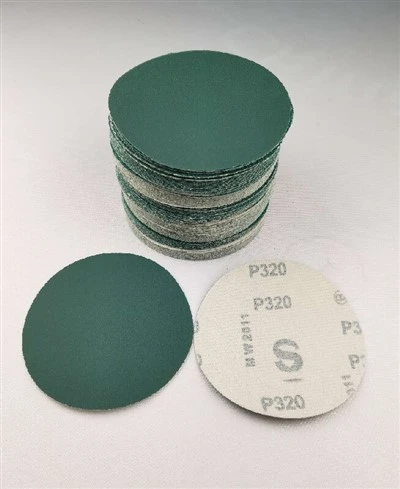
As a seasoned supplier of Resion Abrasive Discs, I am often asked about the grinding accuracy of our products. Grinding accuracy is a critical factor in the performance of abrasive discs, and it determines the quality of the surface finish and the precision of the machining process. In this blog post, I will delve into the concept of grinding accuracy, how it is measured, and the factors that influence the grinding accuracy of Resion Abrasive Discs.
Understanding Grinding Accuracy
Grinding accuracy refers to the degree to which the actual grinding result conforms to the desired specifications. It encompasses several aspects, including dimensional accuracy, shape accuracy, and surface roughness. Dimensional accuracy is the difference between the actual size of the workpiece after grinding and the intended size. Shape accuracy concerns the conformity of the ground surface to the desired geometric shape, such as flatness, roundness, or cylindricity. Surface roughness, on the other hand, is a measure of the texture of the ground surface, which affects the appearance and functionality of the workpiece.
Measuring Grinding Accuracy
There are several methods for measuring grinding accuracy. For dimensional accuracy, precision measuring tools such as micrometers, calipers, and coordinate measuring machines (CMMs) are commonly used. These tools can provide highly accurate measurements of the dimensions of the workpiece. Shape accuracy can be assessed using instruments like profilometers, which measure the surface profile of the workpiece, and roundness testers, which evaluate the roundness of cylindrical objects. Surface roughness is typically measured using a roughness tester, which quantifies the irregularities on the surface of the workpiece.


Factors Affecting the Grinding Accuracy of Resion Abrasive Discs
The grinding accuracy of Resion Abrasive Discs is influenced by a variety of factors, including the quality of the abrasive material, the design of the disc, the grinding parameters, and the condition of the grinding machine.
Abrasive Material
The quality of the abrasive material is one of the most important factors affecting grinding accuracy. Resion Abrasive Discs are made from high - quality abrasive grains, such as aluminum oxide, silicon carbide, and cubic boron nitride. These abrasives have different hardness, toughness, and cutting properties, which can impact the grinding accuracy. For example, aluminum oxide is a common abrasive that is suitable for grinding a wide range of materials, including metals, ceramics, and composites. It offers good cutting performance and is relatively cost - effective. Silicon carbide, on the other hand, is harder and more brittle than aluminum oxide, making it ideal for grinding hard and brittle materials such as stone and glass. Cubic boron nitride is an extremely hard abrasive that is used for grinding high - hardness materials, such as hardened steel and superalloys.
Disc Design
The design of the Resion Abrasive Disc also plays a crucial role in grinding accuracy. The shape, size, and structure of the disc can affect the distribution of the abrasive grains, the cutting forces, and the heat dissipation during grinding. For instance, a well - designed disc with an appropriate grain size and bond strength can ensure a consistent and efficient grinding process. Additionally, the disc's shape can be optimized for specific grinding applications. For example, Stone Abrasive Wheel are designed with a special shape and structure to provide better cutting performance and accuracy when working with stone materials.
Grinding Parameters
The grinding parameters, such as grinding speed, feed rate, and depth of cut, have a significant impact on grinding accuracy. The grinding speed determines the cutting efficiency and the surface finish of the workpiece. A higher grinding speed can increase the cutting rate but may also lead to increased heat generation and reduced grinding accuracy if not properly controlled. The feed rate refers to the rate at which the workpiece moves relative to the grinding disc. A proper feed rate is essential to ensure uniform grinding and avoid over - or under - grinding. The depth of cut is the amount of material removed in each pass of the grinding disc. A larger depth of cut can increase the material removal rate, but it may also cause more significant cutting forces and decrease the grinding accuracy.
Grinding Machine Condition
The condition of the grinding machine is another factor that affects grinding accuracy. A well - maintained grinding machine with good rigidity, precision, and stability can provide a more accurate grinding process. The machine's spindle, bearings, and drive system should be in good condition to ensure smooth and stable operation. Additionally, proper alignment and calibration of the grinding machine are crucial for achieving high - precision grinding results.
Benefits of High Grinding Accuracy with Resion Abrasive Discs
Using Resion Abrasive Discs with high grinding accuracy offers several benefits. Firstly, it results in a better surface finish of the workpiece. A smooth and uniform surface finish not only enhances the appearance of the workpiece but also improves its functionality. For example, in mechanical engineering applications, a smooth surface finish can reduce friction, wear, and noise, and improve the performance and reliability of the components.
Secondly, high grinding accuracy allows for precise dimensional control. This is particularly important in industries such as aerospace, automotive, and medical device manufacturing, where tight tolerances are required. With Resion Abrasive Discs, manufacturers can produce components with high precision, ensuring that the parts fit together perfectly and meet the strict quality standards.
Thirdly, high - accuracy grinding can increase productivity. By reducing the need for secondary finishing operations, such as polishing and deburring, Resion Abrasive Discs can help manufacturers save time and cost. Moreover, the consistent and accurate grinding performance of our discs can minimize the number of rejected parts, leading to higher overall production efficiency.
Applications of Resion Abrasive Discs with High Grinding Accuracy
Resion Abrasive Discs are widely used in various industries due to their high grinding accuracy.
In the metalworking industry, our Grinding Cut Off Disc are used for cutting, grinding, and finishing metal parts. They can be used to grind steel, iron, aluminum, and other metals with high precision, making them suitable for applications such as machining, fabrication, and repair.
In the stone and construction industry, Stone Abrasive Wheel are essential for cutting, shaping, and polishing stone materials. Whether it is granite, marble, or concrete, Resion Abrasive Discs can provide accurate and efficient grinding results, ensuring the quality and precision of the stone products.
In the automotive and aerospace industries, Steel Abrasive Wheel and Iron Cutting Disk are used for manufacturing high - precision components. These components require tight tolerances and excellent surface finish, and Resion Abrasive Discs can meet these demanding requirements.
In the woodworking and fabrication industry, Grinder Abrasive Wheel are used for grinding and shaping wooden and composite materials. They can help achieve smooth and accurate surfaces, enhancing the quality and aesthetics of the finished products.
Contact for Procurement
If you are interested in our Resion Abrasive Discs and want to discuss your specific requirements, we welcome you to reach out to us for a procurement consultation. Our team of experts is ready to provide you with detailed information about our products, including their grinding accuracy, application suitability, and pricing. We are committed to providing high - quality abrasive discs that can meet the diverse needs of your business.
References
- Kalpakjian, S., & Schmid, S. R. (2013). Manufacturing Engineering and Technology. Pearson.
- Trono, G. (2005). Modern Grinding Technology. Industrial Press Inc.
- Boothroyd, G., Dewhurst, P., & Knight, W. (2002). Product Design for Manufacture and Assembly. Marcel Dekker.