


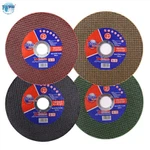

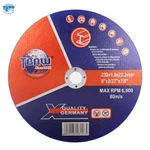

Grinder Abrasive Wheel
Zhejiang Wanna Industry&Trade Co.,Ltd was established in 1995. A professional manufacturer of cutting wheels, grinding wheel and Flap disc for over 20 years experience.our brand is "TBAW" which is upgraded in 2010. "TBAW" is the best abrasive wheels, to pursue the perfect combination of quality and appearance.
During the 20 years,we have 100 production lines and 300 employees, 4 tunnel kilns and it's all controlled by computer. the annual capacity is more than 200 million pieces.
Why Choose US
Reliable Product Quality
Besides, we also have Authoritative standard laboratory, we have Chemical Analysis Room, Physical Exammination room, Abrasives testing room. Dozens of machines to control quality: Analiza material, Resin PH acid-stage, impurity element, Resin Voscosity, Grain composition, Abrasive toughness, corrosion resitance, fiberglass net elongation..., The machine to testing: speed, and side loading, side impact, was imported from Italy, which can meet the OAS and EN12413 European standard.
Rich Experience
A professional manufacturer of cutting wheels, grinding wheel and Flap disc for over 20 years experience. A good abrasive manufacturer delivers quality abrasive products that meet or exceed industry standards. The more products a manufacturer offers, the more options they provide to their customers to choose the perfect abrasive that meets their specific needs.
Production Equipment
- We have more than 100 automatic production lines.
One day output(day shift):
105-125(4"-5")small sizes:800000pcs
150-230(6"-9")middle size:200000pcs
300-400(12"-16")big sizes:100000pcs
Flap disc:100000pcs
- We have 4 tunnel kilns which controlled by computer. Automatic tunnel kiln will make the quality more stable and color more consistent.
- Authoritative standard laboratory
Chemical Analysis Room Physical Exammination Room Abrasives testing Room
Dozens of machines to control quality: Analize Material, Resin PH acid-stage, impurity element, Resin Voscosity, Grain composition, Abrasive toughness, corrosion resitance, fiberglass net elongation..., The machine to testing: speed, and side loading, side impact, was imported from Italy, which can meet the OAS and EN12413 European standard.
Our Service
About after-sales, if you want to take photo or video and describe the process of operation, then we will make quick analysis and judgment and offer the solution timely.


Advantages of Grinder Abrasive Wheel
Result in Smooth Even Surfaces
Abrasive cutting wheels ensure you achieve precise metal cutting. They are applications that can handle tight tolerance and high precision.
Their ability to grind and erode the workpiece helps you achieve a smooth and accurate surface.
The Grains Self Dress
These non-reinforced abrasive cutting wheels have countless sub-micron cutting particles. They self-dress when they get worn off.
The dull-edged grains usually break off to result in sharper cutting edges.
They have a continuous presentation of fresh cutting edges with each successive use. It ensures you don't worry about maintenance.
Has a Wide Variety of Applications
Aside from rods and extractions, abrasive wheels can also be used for cutting tubes and dielectric materials.
You can easily cut composite and coated metals with no limits.
Abrasive Wheels Work at a Fast Rate
A grinder wheel works at a faster rate when compared to other precision cutting methods, such as laser and Electric Discharge Machine (EDM).
You can even bundle together the materials you need to cut for cost savings on high-volume cutting. This is an extremely effective advantage as you'll also achieve a smaller diameter for a bundle with more materials.
How to Choose the Right Grinding Wheel for Your Project
The selection of the right grinding wheel is based on various factors, and it is important to consider each factor based on your application.
Every material responds differently to the grinding operation. While some materials are easy to grind, others pose several challenges during the operation. As a result, it is important to select the right grinding wheel for your project.
Ferrous materials generally use aluminium oxide grinding wheels. On the other hand, silicon carbide wheels are ideal for non-ferrous metals like copper, and some non-metals.
Tough materials that are difficult to grind with standard abrasives usually require the use of ceramic wheels. Diamond abrasives are best for grinding non-metals like concrete, asphalt, and stones.
Amount of Material to be Removed by the Grinding Wheels.
The grain size of the abrasive primarily determines the amount of material removed during a grinding operation. The coarser the grain, the higher the material removal rate.
However, a high material removal rate leads to a poor surface finish. As a result, a fine-grain abrasive is recommended for finishing operations where a small amount of material is removed to achieve a high surface finish.
Every grinding operation involves using a coarse-grain abrasive to remove material and achieve an even surface. Achieving the required surface finish usually requires a fine-grain abrasive grinding.
Removing a large amount of material requires high grinding pressure. This grinding pressure can dull the abrasives. It can also generate frictional heat. As a result, it is advised to use a soft bond grinding wheel. This allows the dull grains to fall off, preventing the rubbing action and reducing frictional heat.
Therefore, a soft bond grinding wheel with coarse abrasives is recommended for grinding hard materials. A hard-grade wheel is preferred for grinding soft materials.
The Surface Finish Required
The surface finish of the final product depends on the grit number of the grinding wheel. Every grinding wheel has a grit number. This provides information about the density of abrasives on the wheel.
A fine-grit abrasive is suitable for operations where a good surface finish is desirable over a high material removal rate. Furthermore, fine-grit wheels are also recommended for applications where the area of contact between the grinding wheel and the workpiece is very small.
This is because a small area of contact exerts greater force per unit area. It can rip the abrasives off the wheel. A densely packed fine grit abrasive provides comparatively more points of contact to distribute the load. It prevents the abrasives from falling off.
Speed of The Grinding Wheel
The speed of the grinding wheel determines the type of bond suitable for your application. The higher the wheel speed, the higher the cutting force. Therefore, preventing the abrasives from falling off requires a durable bond.
Generally, the vitrified bond is suitable when the wheel speed is below 6,500 SFM (surface feet per minute). Organic bonds are recommended for up to 8,500 SFM. For speeds over 8,500 SFM, use special bonds rated for high-speed grinding.
Apart from the type of bond, wheel speed also affects the grade hardness of the wheel. By the rule of thumb, a grinding wheel acts one grade harder or softer for every 1,000 SFM increase or decrease in the wheel speed, respectively.
Coolant Requirement
Different types of bonds act differently based on the use of coolant during the grinding operation. During dry grinding, vitrified bond wheels will be harder and generate more heat. This can result in overheating of the workpiece. On the other hand, Organic bond wheels tend to soften under heat. This increases tool wear.
In contrast, using a coolant during the grinding operation will reduce the frictional heat. The absence of frictional heat will soften the vitrified bond wheels and harden the organic bond wheels.
Grinding Wheel Maintenance
Grinding wheels are multipurpose tools that are used for various applications. Apart from selecting the right grinding wheel, it is also important to ensure proper maintenance of the wheel.
Grinding produces tiny chips that can fill the pores on the wheel, rendering the wheel dull. Therefore, it is important to dress the wheel regularly to retain its sharpness. The maintenance of the grinding wheels involves running the wheel and placing a dresser tool against its face.
Production Steps and Process of Grinding Wheel
A grinding wheel is a tool commonly used for grinding, cutting and polishing. The following are the production steps and process of grinding wheel:
Raw material preparation: The main raw materials for the production of grinding wheels are sand grains, binders and fillers. Sand particles are generally high hardness and durable mineral powders such as alumina and silicon carbide. Binders are generally resins, ceramics, etc. Fillers are used to adjust the hardness and density of the grinding wheel.
Mixing Raw Materials: Mix raw materials such as sand grains, binders, fillers and so on according to a certain proportion to form the basic material of the grinding wheel.
Pressing: Put the uniformly mixed base material into a pressing machine for pressing. High pressure is required to ensure the density and hardness of the grinding wheel sheet during pressing.
Preheating: Through high temperature preheating treatment, the structure of the grinding wheel is stronger and more durable.
Forming: Cut the pressed and preheated grinding wheel sheet into the required size and shape with a cutting machine. And the surface treatment is carried out to make the grinding wheel smoother when used.
Drying: Dry the formed grinding wheel in an oven to remove moisture.
Finished Product Inspection: The final quality inspection of the grinding wheel, including the detection of parameters such as hardness and density. Only the grinding wheel discs that pass the inspection can be sold and used.
Packing: Pack the quality-checked discs with appropriate packaging materials to protect them from damage during transportation and storage.
Grinding wheels are important tools in the wheel's processes for shaping and finishing materials. Thus, they consist of various components that contribute to their function and performance. So, here are some components of grinding wheels.
Abrasive Grain Size. The size of the abrasive particles determines the wheel's cutting ability and the finish quality of the workpiece.
Borazon. Borazon is an abrasive material known for its hardness and is ideal for grinding hard firm materials.
Silicon Carbide. This abrasive is harder than aluminum oxide and is useful for grinding soft metals, cast iron, and certain ceramics.
Coolant Use. Applying coolant reduces heat and friction during grinding, extending the wheel's life and preventing damage to the workpiece.
Wheel Speed. The speed at which the grinding wheel rotates affects the efficiency of the grinding process and the quality of the finished product.
Aluminum Oxide. A common abrasive material useful in grinding wheels, aluminum oxide is suitable for grinding high-elastic materials such as steel and other hard alloys.
Diamond. The hardest known material, diamond is useful in grinding wheels for cutting and grinding hard materials like ceramics.
Vitrified Bonds. These bonds are made from a combination of clays and other ceramic materials, providing strength and durability to the grinding wheel.
Safety Tips for using Abrasive Wheels
Abrasive wheels, or grinding wheels, are a common tool used in many manufacturing industries and operations all around the world. They can be used to perform a number of different manufacturing tasks, from helping with filing, drilling, welding and forging, to providing a useful tool in belt grinding and sand blasting processes. For some operations, an abrasive wheel is essential - but, as with most equipment used in the workplace, there are a number of safety tips that employees should be aware of before handling such equipment.
Use, store and handle all abrasive wheels carefully. Always check for service limits and any potential damage before use, even the tiniest in cracks or chips could provide a health hazard for you and your employees.
Check the machine that you are to use the wheel with - is it the correct wheel for that machine? Does it fit correctly and has the work rest been fitted? Check the dimensions of the flanges that are to be used, are they equal? Do also check that your wheel fits the speed specification listed, and that you use blotters provided.
Every abrasive wheel requires a safety cover - make sure that you ensure one is fitted and in operation once you are sure the correct wheel has been fitted for the machine.
Ensure that you yourself are equipped with the correct safety equipment and that you wear safety goggles and protective mask at all times during operation - using abrasive wheels is just as much about keeping yourself safe from harm as it is ensuring that the equipment is being used correctly. Do also exercise good dust control while in use.
Operate the abrasive wheel for a 'test run' before you put it to work - this will enable you to warm up your machine without fear of it operating incorrectly. A trial spin of around one minute will satisfy a day's work, whereas three minutes will satisfy a new wheel altogether. An abrasive wheel needs warming up just as much as a person! They also need to cool down, so ensure that the coolant is shut down before the wheel rotation.
Do not under any circumstances use an abrasive wheel which has been subject to impact or damage, or which fails any form of your initial inspection. It is also important to mount abrasive wheels which do not match the fittings or speed of any machine that you are likely to be using.
Know your equipment - do not use damaged flanges or the sides of your abrasive wheel - unless you are advised to do so. It's also important not to adjust the nuts too tightly, and it is crucial that you do not operate the equipment until the protective cover is mounted in place. Getting abrasive wheel training would also improve your knowledge of the equipment.
Do not touch the abrasive wheel with any part of your body, or apply excessive force during operation. Doing so will not only risk damage to the machine and wheel, but will also potentially harm you.
Always avoid using an abrasive wheel in locations where explosions or flame ignitions may occur, and be careful not to move a portable wheel or machine while it is still in operation.
Above all, abrasive wheels should not be changed or tested without the supervision of a trained member of staff. It is also crucial that you do not stand directly in front of a testing wheel - if you have training in how to use such wheels, you will already know this!
Materials of Metric Roller Chain SprocketWhat Are the Proper Ways for Grinding Wheel Maintenance
Grinding wheel maintenance is an ideal way to ensure that your wheels are in good working condition. Without proper care and maintenance of these wheels during and after use, their quality and service life could be affected. So, take the following steps to continually have a good wheel that can enhance your productivity:
How To Handle Your Wheel
For grinding wheel maintenance, you must avoid dropping the wheel anywhere or handling them anyhow. This can get it damaged.
During transportation or shipping, the wheel should be kept in a safe place– you can do this through proper logistic planning.
It would be best to keep the wheel from water/moisture and direct heat for great grinding wheel maintenance
How To Assemble Your Wheel
Before assembling the wheel, you should do a visual inspection. This is to know if there are damages and cracks on the wheel.
It's crucial that you do a "ring test." to do this test, you will tap the wheel gently using light and nonmetallic instrument. If your wheel is stable and undamaged, it will produce a clear metallic "ring " or tone. This sound is from the material's hardness in the wheel and the wheel's ability to send sound vibrations.
You should avoid altering a hole in the grinding wheel and ensure you clean smooth blotters
Grinding wheel experts will advise that buyers of the wheels should go for the correct product for their operations. The wheel's flange should have a flat surface. This surface must also be without any burr, defect, and so on. You should ensure that you check the flange regularly for gouges, nicks, flatness, etc. Besides, avoid using a smaller or uneven diameter flange.
How To Balance Your Wheel
For grinding wheel maintenance, you should ensure that the adopter and mandrel tapers are the same.
The mandrel nut should be tightened appropriately.
You should ensure that the balancing weight is tightened correctly.
How To Mount Your Wheel
You must ensure that the spindle surface and adopter hole are without foreign materials. Both adopter and spindle tapers are expected to be the same.
The nut should be tightened properly.
To load and unload the wheel, you can use jib crane.
The safety guard of the wheel should be properly closed after the mounting process.
To ensure that no element is interrupting the wheel, you should rotate it manually before powering the grinder.
Other Tips For Grinding Wheel Maintenance And Operation
For grinding wheel maintenance, ensure that the stipulated linear velocity of the grinding wheel is not exceeded.
After installing the wheel, an idling of more than 5 minutes is required. This is to ensure that the wheel features enough strength.
For wheels with resin bonds, harmful cooling should be avoided.
The period for storing resin bond grinding wheels should be within a year. It must be given proper inspection if it exceeds a year, and there must be a quality check.
For good grinding wheel maintenance, it would be best to avoid cold and dampness where grinding wheels are stored.
FAQ
Hot Tags: grinder abrasive wheel, China grinder abrasive wheel manufacturers, suppliers, factory, disposable stone cutting disc, masonry cutting disc, grinding wheel for stone cutting, Grinding Disc for Metal, porcelain cutting disc, saw blade for marble cutting
Previous
Steel Abrasive WheelYou Might Also Like


Send Inquiry