


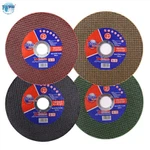

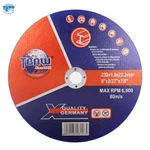

Grinder Abrasive Wheel
Dimension DxTxH(mm): 180x3.0x22.2
What is Grinder Abrasive Wheel
A grinder abrasive wheel is a type of wheel specifically designed for use with grinding machines or power tools. It typically consists of a circular disc with an abrasive material bonded to its surface.The abrasive material on the wheel can vary, depending on the application and the type of material being ground. Common abrasive materials include aluminum oxide, silicon carbide, diamond, and cubic boron nitride.
Why Choose Us
Reliable Product Quality
Seiko workshop,constant temperature all year round. For the stability of the raw material of the product,adhesive force has an important guarantee,to ensure the product quality more stable.
Rich Experience
A professional manufacturer of cutting wheels, grinding wheel and Flap disc for over 20 years experience. A good abrasive manufacturer delivers quality abrasive products that meet or exceed industry standards.
Range of Products
The more products a manufacturer offers, the more options they provide to their customers to choose the perfect abrasive that meets their specific needs.
Delivery Options
We offer a variety of transmission components, including sprockets, roller chains, gears, couplings, racks, hubs, pulleys, taper sleeves, bearing seats, and more.


Advantages of Grinder Abrasive Wheel

Ease of Use
Grinder abrasive wheels are relatively straightforward to operate, and with the right training and safety measures, they can be used by workers with varying skill levels.
Adaptability
Abrasive wheels can be attached to different types of grinders, such as bench grinders, angle grinders, and pedestal grinders, providing flexibility in terms of workstation setup and task requirements.
Speed
The high RPMs available with most grinders allow for fast cutting and grinding, which can significantly increase productivity in both batch and single-unit production environments.
Material Removal Rate
The aggressive nature of abrasive wheels means they can remove material quickly, which is beneficial when dealing with thick or hard materials that would otherwise take longer to shape or cut.
Versatility
Abrasive wheels come in a wide range of sizes, shapes, grits, and materials, enabling them to perform a multitude of tasks such as cutting, shaping, finishing, deburring, and sharpening different materials, including metals, plastics, and wood.
Efficiency
The design of abrasive wheels allows for rapid material removal, making them highly efficient for heavy-duty operations where quick results are needed. They can handle tough jobs that might otherwise require extensive manual labor or more time-consuming methods.
Precision
Fine-grit abrasive wheels can achieve precise finishes and detailed work. This is crucial for applications requiring intricate cuts or surfaces with minimal imperfections.
Cost-effectiveness
Abrasive wheels are generally economical when compared to other cutting and shaping tools. They can last a long time if used properly, reducing the frequency of replacements and overall costs.
Types of Grinder Abrasive Wheel
There are several types of grinder abrasive wheels, each designed for specific applications and materials. Here are some common types:
Straight Wheel: This is the most basic type of grinder abrasive wheel. It has a flat surface and is used for general grinding and shaping tasks.
Cylindrical Wheel: As the name suggests, this wheel is cylindrical in shape and is commonly used for grinding cylindrical objects like shafts or tubes.
Tapered Wheel: A tapered wheel has a angled surface and is used for grinding tapered or beveled surfaces.
Flap Disc: A flap disc consists of multiple abrasive flaps attached to a backing disc. It is used for light grinding, deburring, and finishing tasks.
Bonded Abrasives: These wheels are made by bonding abrasive particles to a wheel substrate. They come in various grades and types, such as aluminum oxide, silicon carbide, and diamond.
Superabrasives: Wheels made from superabrasive materials like diamond or cubic boron nitride are used for grinding very hard materials or achieving high precision.
Wire Wheel: A wire wheel is not strictly an abrasive wheel, but it's often used with grinders for removing rust, paint, or debris from surfaces.
Application of Grinder Abrasive Wheel
Metal Fabrication
In metalworking shops, abrasive wheels are employed for cutting, shaping, and finishing metal parts. They're used to trim excess material from welds, deburr edges, and create precise contours on metal surfaces.
Manufacturing
In manufacturing settings, abrasive wheels are utilized for removing burrs, scale, and rust from machined parts, as well as for shaping and polishing components to meet stringent specifications.
Automotive Repair
Mechanics and technicians rely on abrasive wheels to grind down valves, resurface engine blocks, and prepare surfaces for painting or plating.
Construction
For construction projects, abrasive wheels help in cutting and shaping building materials like concrete, stone, and metal pipes. They are also used to remove old coatings or adhesives from surfaces.
Aerospace
In the aerospace industry, abrasive wheels are critical for maintaining the precise dimensions and surface finish of aircraft components.
Electronics
For electronics manufacturing, abrasive wheels are used to clean and prepare electronic components and circuit boards.
Art and Sculpture
Artists and sculptors use abrasive wheels to shape and detail their creations, especially when working with hard materials like metal or stone.
Woodworking
While less common, certain types of abrasive wheels can be used to shape and finish wooden objects, though this is typically done with sanding belts or disks.
Maintenance and Repair
Abrasive wheels are used for routine maintenance tasks such as removing corrosion, preparing surfaces for repainting, and repairing damaged machinery or structures.
Material of Grinder Abrasive Wheel
The material of a grinder abrasive wheel can vary depending on the specific application and the type of material being ground. Here are some common materials used for grinder abrasive wheels:
1. Aluminum oxide: This is one of the most widely used abrasive materials. It is suitable for grinding a variety of materials, including metals, ceramics, and composites.
2. Silicon carbide: Silicon carbide wheels are often preferred for grinding hard materials like cast iron, non-ferrous metals, and stone.
3. Diamond: Diamond wheels are extremely hard and are used for grinding very hard materials, such as ceramics, marble, and granite. They are also used for precision grinding applications.
4. Cubic boron nitride (CBN): CBN wheels are similar to diamond wheels in terms of hardness and are often used for grinding hard metals like tool steels and superalloys.
5. Composite materials: Some grinder abrasive wheels may combine different materials to achieve specific properties. For example, a wheel might have a layer of diamond or CBN on a substrate made of another material.
The choice of abrasive wheel material depends on factors such as the hardness of the material being ground, the desired finish, and the speed at which the grinding needs to be done. It's important to select the appropriate wheel material to ensure efficient grinding and extended wheel life.
When using grinder abrasive wheels, always follow the manufacturer's recommendations and safety guidelines. Additionally, wearing proper personal protective equipment (PPE), such as eye protection and a dust mask, is crucial to prevent injuries.
If you have any specific material or application in mind, I can provide more detailed information and recommendations. Let me know if you need any further assistance!
Diamond wheels and abrasive wheels differ primarily in the type of material used for grinding and the applications they are best suited for.
Diamond Wheels:
Material: Diamond wheels are composed of industrial-grade diamonds, the hardest known natural material, embedded in a metal matrix or resin bond.
Hardness: Due to the extreme hardness of diamonds, these wheels are capable of grinding and cutting very hard materials such as ceramics, carbides, gemstones, optical materials, and composites.
Heat Resistance: Diamonds have high thermal conductivity, which helps dissipate heat generated during grinding, reducing the risk of damage to the workpiece and extending the life of the wheel.
Applications: Common uses include precision grinding of optical lenses, cutting and shaping of superhard alloys, and processing of advanced ceramic materials.


Abrasive Wheels:
Material: Abrasive wheels are made from a bonded mixture of abrasive grains like aluminum oxide (Al2O3), silicon carbide (SiC), or zirconia alumina (ZrO2).
Hardness: While abrasive grains are also hard, they are not as hard as diamonds and therefore may not be suitable for the hardest materials.
Cost: Abrasive wheels are generally less expensive than diamond wheels, making them a cost-effective option for many applications.
Applications: Abrasive wheels are widely used for metalworking tasks such as cutting, shaping, deburring, and finishing steel, stainless steel, cast iron, and other ferrous and non-ferrous metals.
In summary, diamond wheels are superior for working with extremely hard materials and require high precision, whereas abrasive wheels are more commonly used for general metalworking and fabrication tasks where the material hardness is not as critical. The choice between diamond and abrasive wheels depends on the specific requirements of the job, including material type, desired finish, and budget.
The grain size of an abrasive wheel refers to the average size of the individual abrasive particles (grains) that make up the wheel's abrasive layer. It is typically measured in units of mesh or grit size, which indicates the number of openings per linear inch in a sieve through which the abrasive particles must pass. A higher mesh number signifies a smaller grain size, meaning the particles are finer and produce a smoother finish. Conversely, a lower mesh number corresponds to larger grains, which are better suited for heavy-duty material removal.
For example, an abrasive wheel labeled as "60 grit" has grains that are roughly 250 micrometers in diameter, while a "120 grit" wheel has grains that are about half that size, around 125 micrometers. The finer grit sizes are used for precision grinding and finishing operations, where a smooth surface is required, while coarser grits are preferred for rough grinding and material removal.
The selection of the appropriate grain size is critical for achieving the desired outcome in terms of material removal rate, surface finish, and wheel life. Coarser grains tend to wear out faster but remove material more quickly, while finer grains provide a smoother finish but wear out more slowly. Thus, the choice of grain size is based on the balance between efficiency and surface quality required for a particular application.
How often Should Grinder Wheels Be Changed or Dressed?


The frequency of changing or dressing grinder wheels depends on several factors, such as the type of material being ground, the amount of usage, and the quality of the wheel. Here are some general guidelines:
Change wheels when they show signs of wear or damage: Look for cracks, excessive wear on the abrasive surface, or any other signs of deterioration. Damaged wheels can pose a safety hazard and may not perform effectively.
Dress wheels regularly to maintain their performance: Dressing involves removing built-up material and restoring the wheel's sharpness. The frequency of dressing depends on the type of wheel and the material being ground. Some wheels may require dressing after every few uses, while others can go longer without dressing.
Follow the manufacturer's recommendations: The manufacturer of your grinder and wheels will provide specific guidelines on when to change or dress the wheels. These recommendations take into account the wheel's material, grit size, and application.
Consider the nature of the work: If you are grinding hard materials or using the grinder intensively, you may need to change or dress the wheels more frequently to maintain their performance and safety.
Monitor the wheel's performance: Pay attention to how the wheel is cutting and the quality of the finish it produces. If you notice decreased cutting efficiency or an uneven finish, it may be time to dress or replace the wheel.As a general rule, it's a good idea to inspect your grinder wheels regularly and replace or dress them as needed to ensure safe and efficient operation.
What is the Common Abrasive used in Grinding Wheel?
The most common abrasive used in grinding wheels is aluminum oxide (Al2O3). Aluminum oxide provides a good balance of hardness, toughness, and thermal conductivity, making it suitable for a wide range of applications, including grinding, cutting, and finishing various types of metals and other materials. It is available in different grades with varying particle sizes and shapes to suit specific grinding requirements.
Another commonly used abrasive is silicon carbide (SiC), which is harder than aluminum oxide and thus better suited for grinding harder materials such as ceramics, silicon, carbides, and gemstones. Silicon carbide abrasives are also used for grinding non-metallic materials and for precision operations that require a finer finish.
Cubic boron nitride (CBN) and diamond are two additional abrasives used in specialized grinding wheels for extremely hard materials. Diamond, being the hardest naturally occurring material, is used for grinding the hardest substances, including superalloys, ceramics, and composite materials. CBN is second only to diamond in hardness and is used for precision grinding of hardened steels, alloy steels, and other difficult-to-machine materials.
Grinding wheels are also characterized by their bond type, which holds the abrasive particles together. Common bonds include vitrified (ceramic), resinoid, rubber, and electroplated. The choice of bond depends on factors such as the abrasive material, the required wheel structure, and the intended use of the wheel.

Precautions for use Grinder Abrasive Wheel
When using grinder wheels, the following precautions should be followed to ensure safe operation and effective performance of the grinding wheel:
1. Select the appropriate grinding wheel: Select the appropriate grinding wheel type, grain size, hardness and bond based on the hardness, shape and required surface quality of the material being processed.
2. Check the grinding wheel: The grinding wheel should be inspected for cracks, damage or defects before installation. Make sure the grinding wheel is intact and has no visible wear.
3. Install the grinding wheel correctly: The grinding wheel should be firmly installed on the grinder and ensure balance. Imbalance may cause machine vibration, affecting machining accuracy and grinding wheel life.
4. Adjust guards: Before starting the grinder, make sure all safety guards are properly installed and in good condition. This includes protective covers, spark dampers and emergency stop switches.
5. Use appropriate fixtures: The workpiece should be properly fixed on the workbench or fixture to prevent it from shifting or flying out during processing.
6. Appropriate feed speed and rotation speed: Choose the appropriate feed speed and rotation speed according to the specifications of the grinding wheel and the workpiece material to avoid excessive speed causing grinding wheel breakage or workpiece burns.
7. Wear personal protective equipment: Operators should wear appropriate protective equipment such as safety glasses, ear plugs, dust masks and protective gloves.
8. Avoid shock loads: Avoid applying sudden impact forces to the grinding wheel as this may cause the grinding wheel to break.
9. Regularly check and replace the grinding wheel: Regularly check the wear of the grinding wheel and replace it in time when the grinding wheel wears to a certain extent to maintain the grinding effect and safety.
10. Comply with operating procedures: Follow the operating manual and safety procedures of the grinder, and ensure that you are familiar with the operating procedures before starting the operation.

Zhejiang Wanna Industry&Trade Co.,Ltd was established in 1995. A professional manufacturer of cutting wheels, grinding wheel and Flap disc for over 20 years experience. our brand is "TBAW" which is upgraded in 2010. "TBAW" is the best abrasive wheels, to pursue the perfect combination of quality and appearance.

FAQ
Q: What is the difference between diamond and abrasive wheels?
Q: How do I choose the right grinder wheel for my application?
Q: What does the wheel's grain size mean?
Q: What do the letters and numbers on the wheel mean?
Q: How do I mount a grinder wheel correctly?
Q: What safety precautions should be taken when using a grinder wheel?
Q: How often should grinder wheels be changed or dressed?
Q: What is abrasive wheel grinder?
Q: What is the use of grinder wheels?
Q: What is the wheel on a grinder called?
Q: What is the common abrasive used in grinding wheel?
Q: What is the best abrasive for grinding steel?
Q: What kind of grinding wheel for hardened steel?
Q: What is the best thing to grind metal with?
Q: What is the best material for grinding hardened steel?
Q: What is the toughest grinding wheel?
Q: What is a Type 7 grinding wheel?
Q: What is the second hardest known abrasive wheel material?
Q: Why can't you grind aluminum?
Q: What do the numbers on a grinding wheel mean?
Hot Tags: grinder abrasive wheel, China grinder abrasive wheel manufacturers, suppliers, factory, limestone cutting disc, grinding wheel for stone cutting, disposable stone cutting disc, saw blade for marble cutting, saw blade for brick cutting, saw blade for quartz cutting
Previous
No InformationYou Might Also Like


Send Inquiry